Iro-Uchikake
色打掛(いろうちかけ)
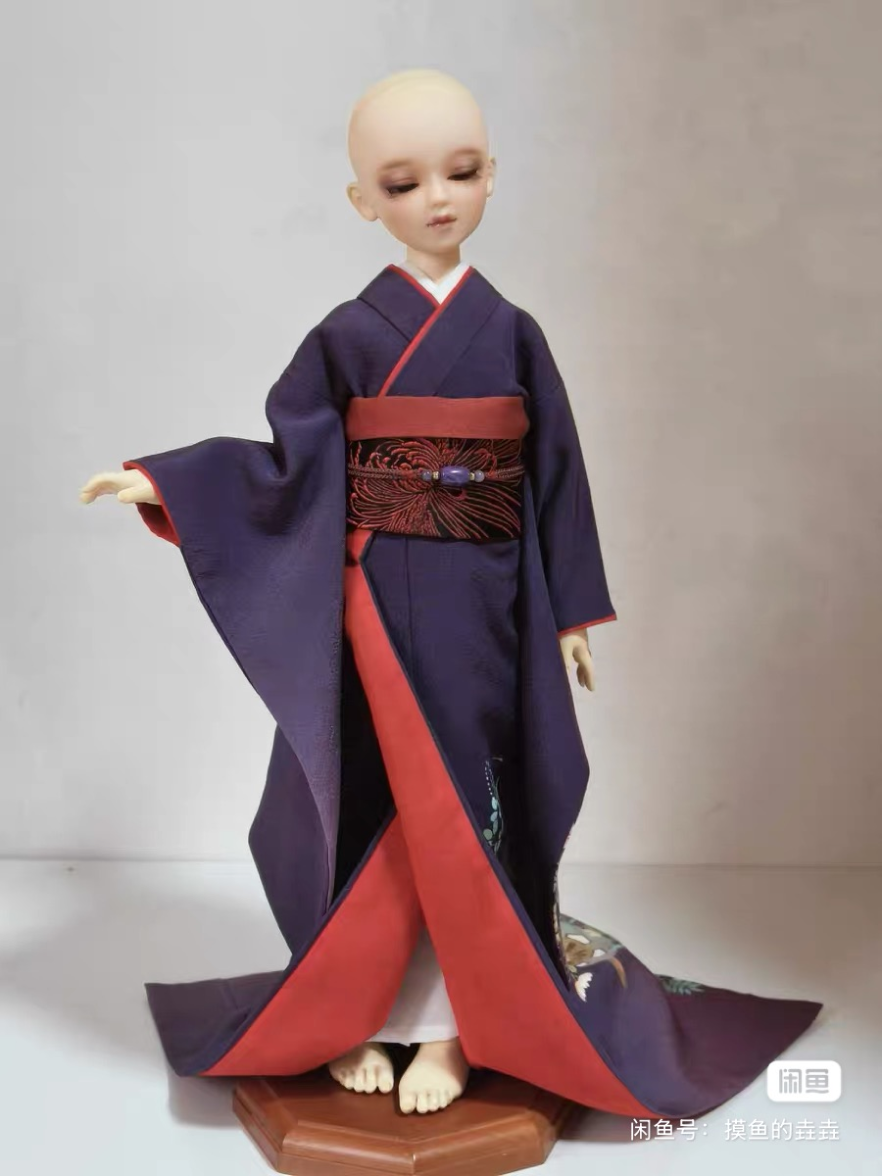
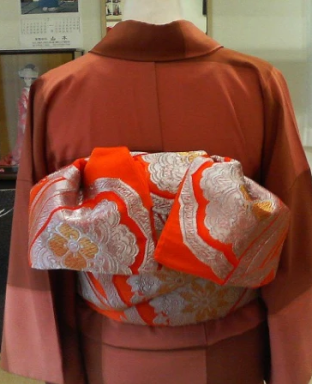
Iro-Uchikake is a richly decorated outer wedding kimono worn by brides. Unlike the all-white Shiromuku, it features vivid colors, embroidery, and symbolic motifs such as cranes, flowers, and seasonal patterns.
MUSUBI simplifies the traditional clothing customization process for BJD owners by bringing scattered resources and steps into one platform. From learning about garment types and finding suitable fabrics to discovering makers, checking patterns, and tracking customization progress, the platform creates a clearer and more connected experience for completing traditional BJD clothing.
01 / Ball-Jointed Dolls
The doll market has a long history. Today, Ball-Jointed Dolls (BJDs) are one of the most recognizable types of articulated dolls. They are named for their ball-shaped joints, which allow the body to move and hold a wide range of poses. The broader doll market also includes other forms such as Mechanically Jointed Dolls (MJD), bisque dolls, hina dolls, etc.
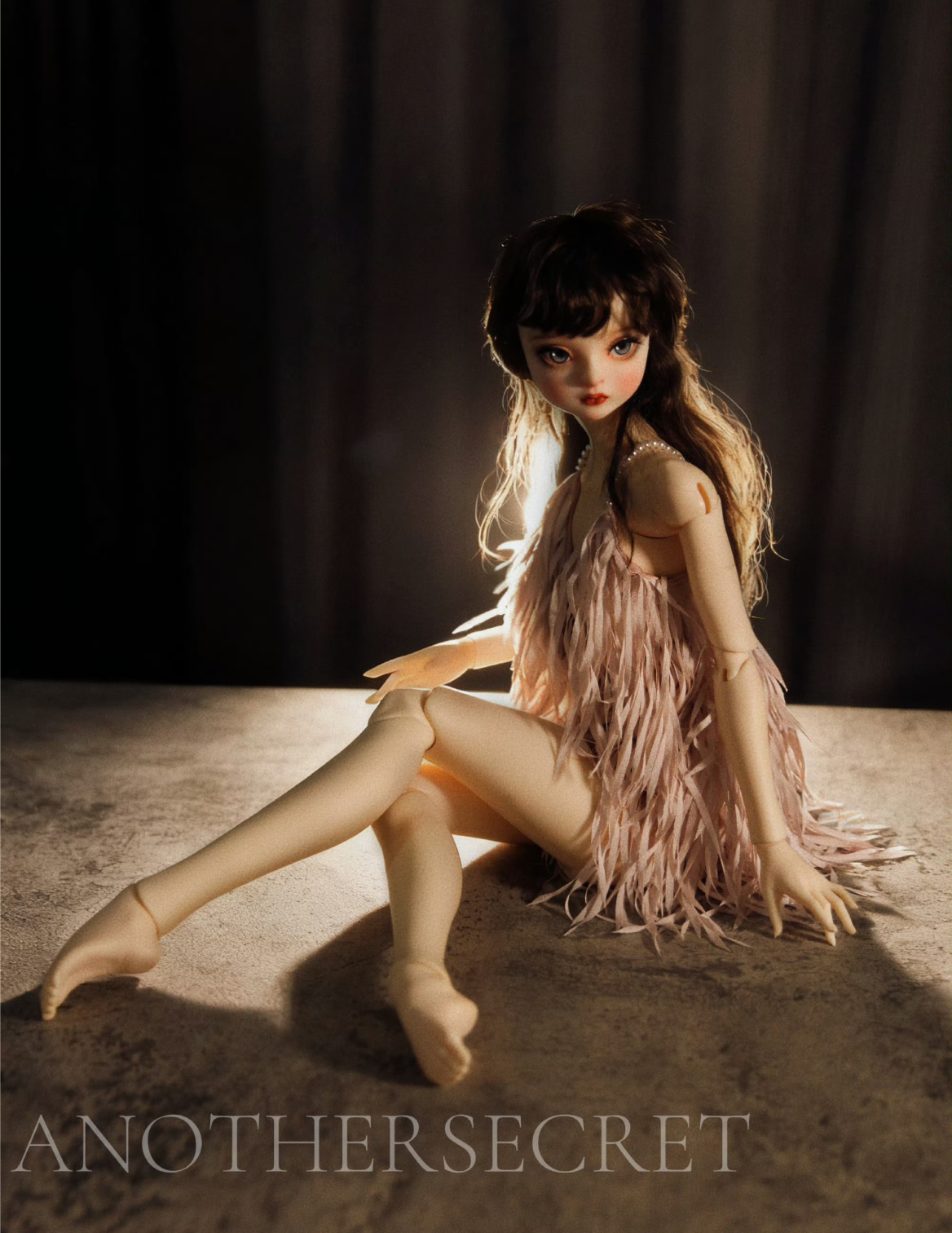
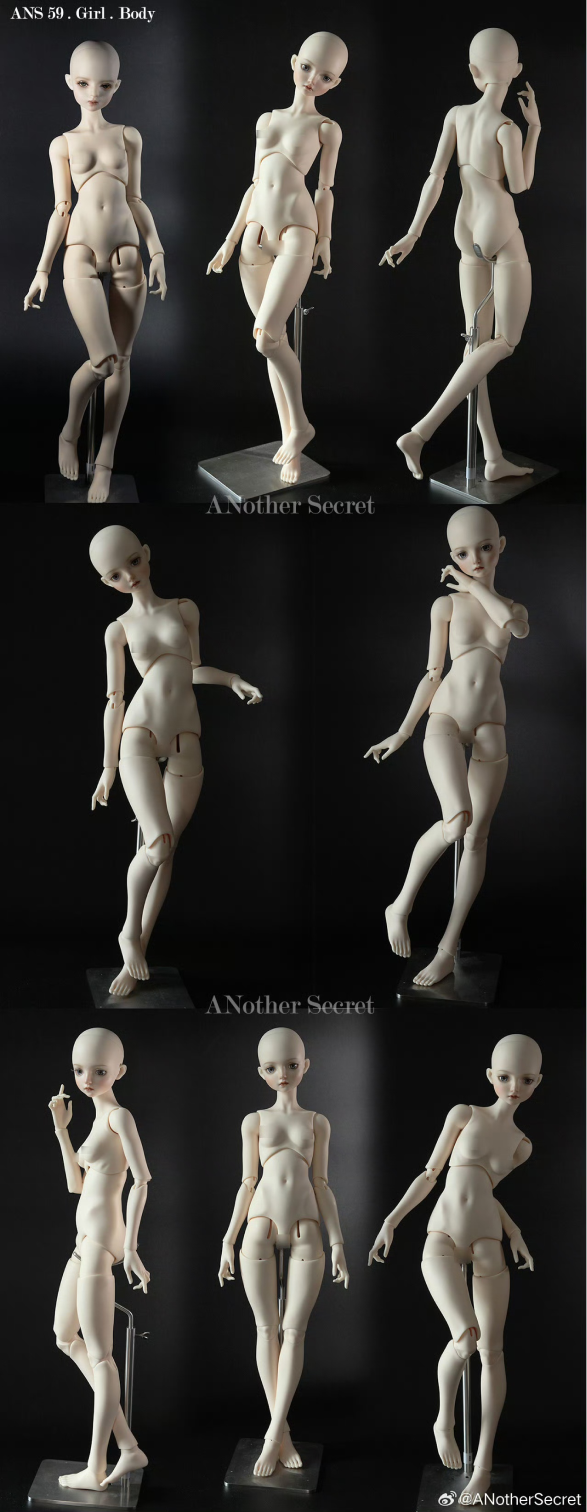
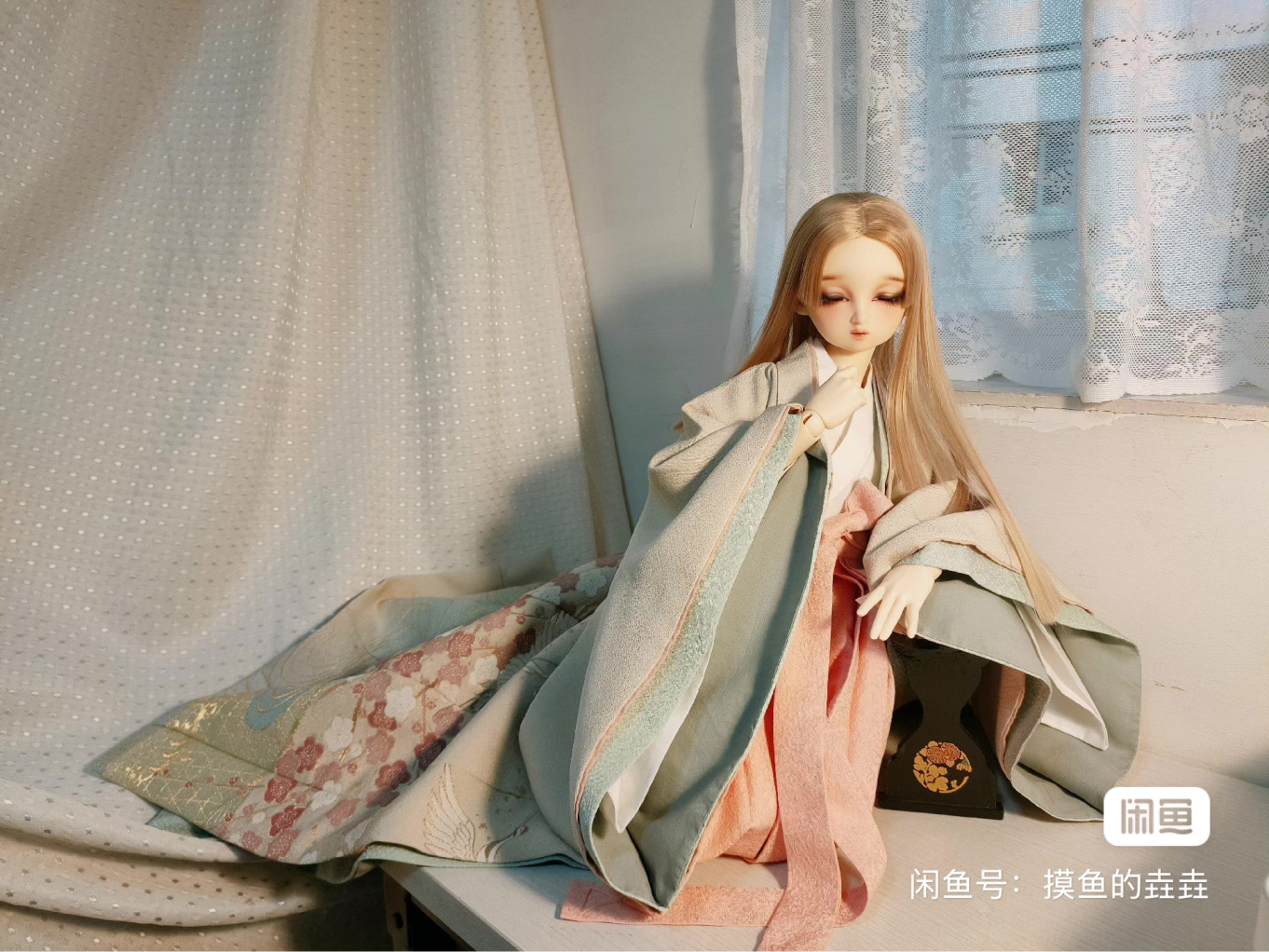
Kimono is a traditional Japanese garment. The classic form of a kimono has a T-shaped, straight-cut construction. It is wrapped around the body and secured with a sash called an obi. Kimono come in many types for different occasions, levels of formality, ages, and seasons. Their fabrics, sleeve lengths, colors, motifs, and accessories can also communicate different meanings.
I list several common kimono types here, arranged from
more formal on the left to less formal on the right.
色打掛(いろうちかけ)
Iro-Uchikake is a richly decorated outer wedding kimono worn by brides. Unlike the all-white Shiromuku, it features vivid colors, embroidery, and symbolic motifs such as cranes, flowers, and seasonal patterns.
振袖(ふりそで)
Furisode is a formal kimono recognized by its long, flowing sleeves. It is traditionally associated with unmarried young women and is often worn for Coming-of-Age ceremonies, weddings, and other celebrations.
黒留袖(くろとめそで)
Kurotomesode is one of the most formal kimono for married women. It has a black base with decorative motifs concentrated around the lower part of the garment and is often worn at formal family events such as weddings.
訪問着(ほうもんぎ)
Hōmongi is a semi-formal kimono whose decorative patterns often continue across seams, creating one connected composition. It is suitable for visits, parties, weddings, and other social occasions.
付下げ(つけさげ)
Tsukesage is a semi-formal kimono with more restrained decoration than Hōmongi. Its motifs are arranged so that they appear upright when the garment is worn, making it appropriate for many social and formal occasions.
袴(はかま)
Hakama are pleated traditional trousers or a skirt-like lower garment worn over kimono. They are associated with formal ceremonies, martial arts, and graduation attire, and are worn by both men and women.
色無地(いろむじ)
Iromuji is a single-colored kimono without large decorative patterns. Its simple appearance makes it flexible for different settings, and its level of formality can change depending on the presence of family crests and accessories.
小紋(こもん)
Komon is a casual kimono covered with small repeated patterns across the fabric. It is commonly worn for everyday outings, casual gatherings, and informal social occasions.
03 / Custom Commission
Kimono customization is a common practice in the BJD community. Collectors often prepare their own fabric, usually by repurposing a full-size kimono, and commission a maker to create kimono for a specific doll size. The process involves many steps, including understanding kimono styles, sourcing fabrics, finding experienced makers, confirming doll measurements, and communicating customization details. For first-time customers, this process is complicated and time-consuming.

Research / 01
Learn kimono types, structures, levels of formality, and styling rules.
!Pain Point: Unfamiliar with kimono terminology, structures, and formality rules.
Pick a style to commission, such as a Furisode, Hōmongi, or Komon.
!Pain Point: Difficult to identify which kimono type best matches the desired style.
Decide which additional pieces are needed, such as obi and obijime.
!Pain Point: Unclear which accessories and materials are needed for a complete outfit.
Search for makers, compare price and quality of craftsmanship.
!Pain Point: Makers are scattered across platforms, making it difficult to compare and pick.
Confirm the kimono type, dimensions, fabric type, accessories, and other details.
!Pain Point: Important decisions are handled through scattered private messages.
Search for suitable fabric and consider textile, size, price, and pattern.
!Pain Point: Requires extensive research and frequent listing checks.
Confirm the final design details with the maker, then wait for production.
!Pain Point: Long and uncertain production schedules with limited visibility into progress.
Receive the completed custom kimono and dress the doll.
!Pain Point: The final kimono may not fully match expectations.
Research / 02
Research / 03
I distributed questionnaires in several BJD communities and conducted chat interviews with a few friends who make or commission custom BJD kimono.
How familiar are you with kimono?
lowhighHow much effort does the BJD kimono commissioning process require?
lowhighKimono Familiarity: The overall BJD community has relatively low familiarity with kimono.
Purchase Experience: Most respondents have never purchased kimono for their dolls.
Purchase Method: Among buyers, custom-made kimono is slightly more common than ready-made options.
Commission Effort: The commissioning process is generally perceived as time-consuming and demanding.
Fabric Splitting: Most respondents are willing to split fabric if it helps reduce the cost.
Main Problem: The main challenges involve kimono knowledge, fabric sourcing, material requirements, and maker communication.
“One full-size kimono provides much more fabric than I need. I usually have around fabric left after making one 1/3-scale kimono depending on the pattern. It is difficult to deal with all the leftovers, so I just keep them stored away.”
“I wanted to customize a kimono for my c’s BJD. But I had no idea how this worked at first. I spent a time researching on Xiaohongshu and searching for suitable fabric in livestreams. Finding a maker and waiting for production then took several more months.”
The research shows that people think getting started with BJD kimono customization is complicated. The study suggests a need for a more integrated and beginner-friendly customization process that connects kimono knowledge, fabric sourcing, fabric splitting, and maker communication in one place.
Flowers mark selected functions.
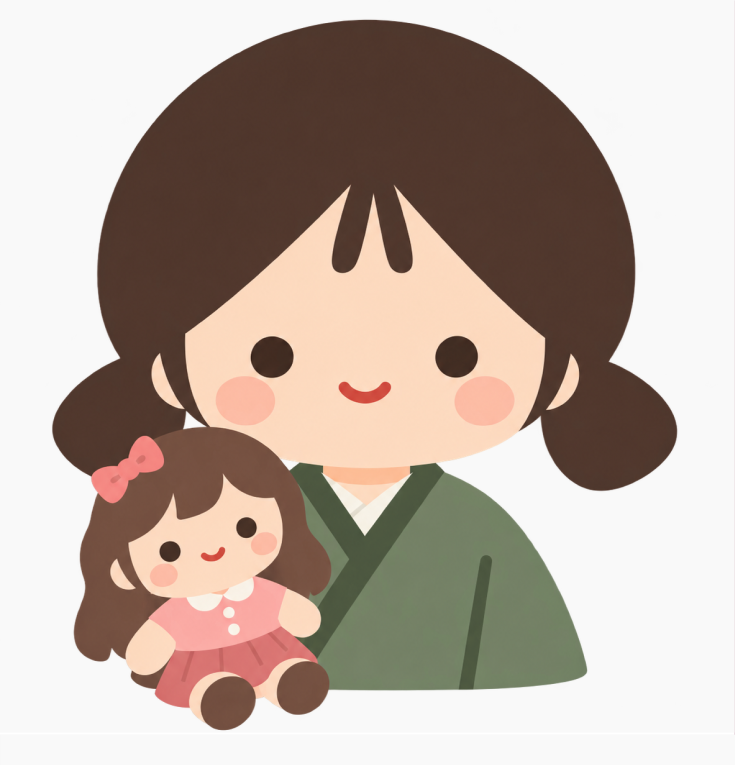
BJD Collector
Hannah“Hi! I’d like to commission the kimono in this picture for my SDGr doll, but I’m not sure what fabric to buy or how much I need. I’m also unsure what material I should get for the obi. Would you be able to provide materials for smaller accessories such as the obijime? Also, what would the estimated production time be? I have so many questions since this is my first time commissioning a doll kimono.”
Hannah has collected BJDs for three years and currently owns more than ten dolls. She buys doll clothes in a wide range of styles from independent makers to dress and customize her dolls. Recently, she became interested in traditional Japanese clothing and wants to commission her first custom kimono for one of her dolls.
Age: 28
Gender: Female
Location: China
BJD Experience: 3 Years
I name this app
A Japanese word meaning connection, tying together, or the knot of the obi.
This name connects the app’s purpose and cultural focus:


The figure symbolizes our users and their dolls.

A geometric reinterpretation of Bunko Musubi, a type of kimono obi knot, forms the initial letter of MUSUBI.
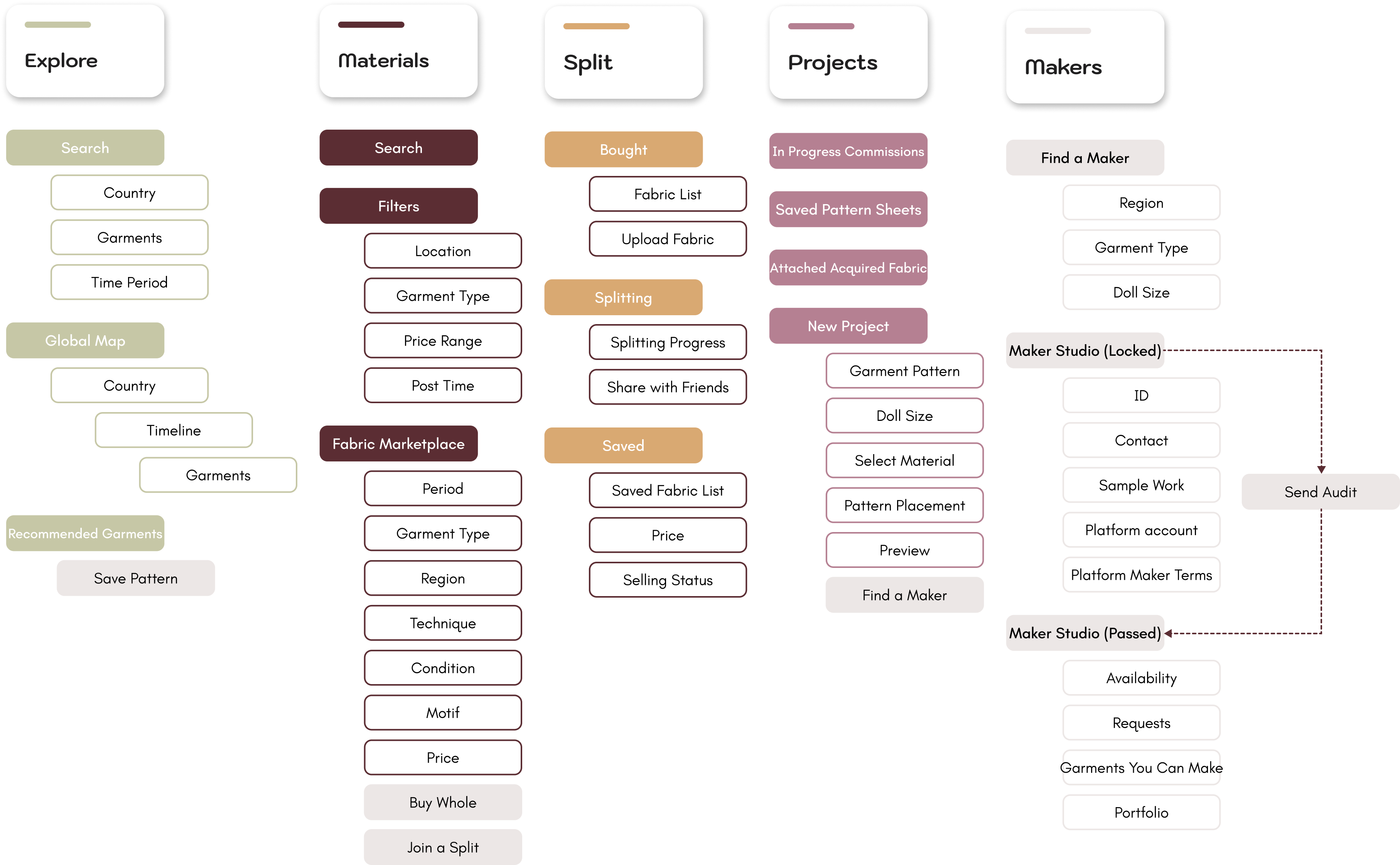
Feature groups & user flow
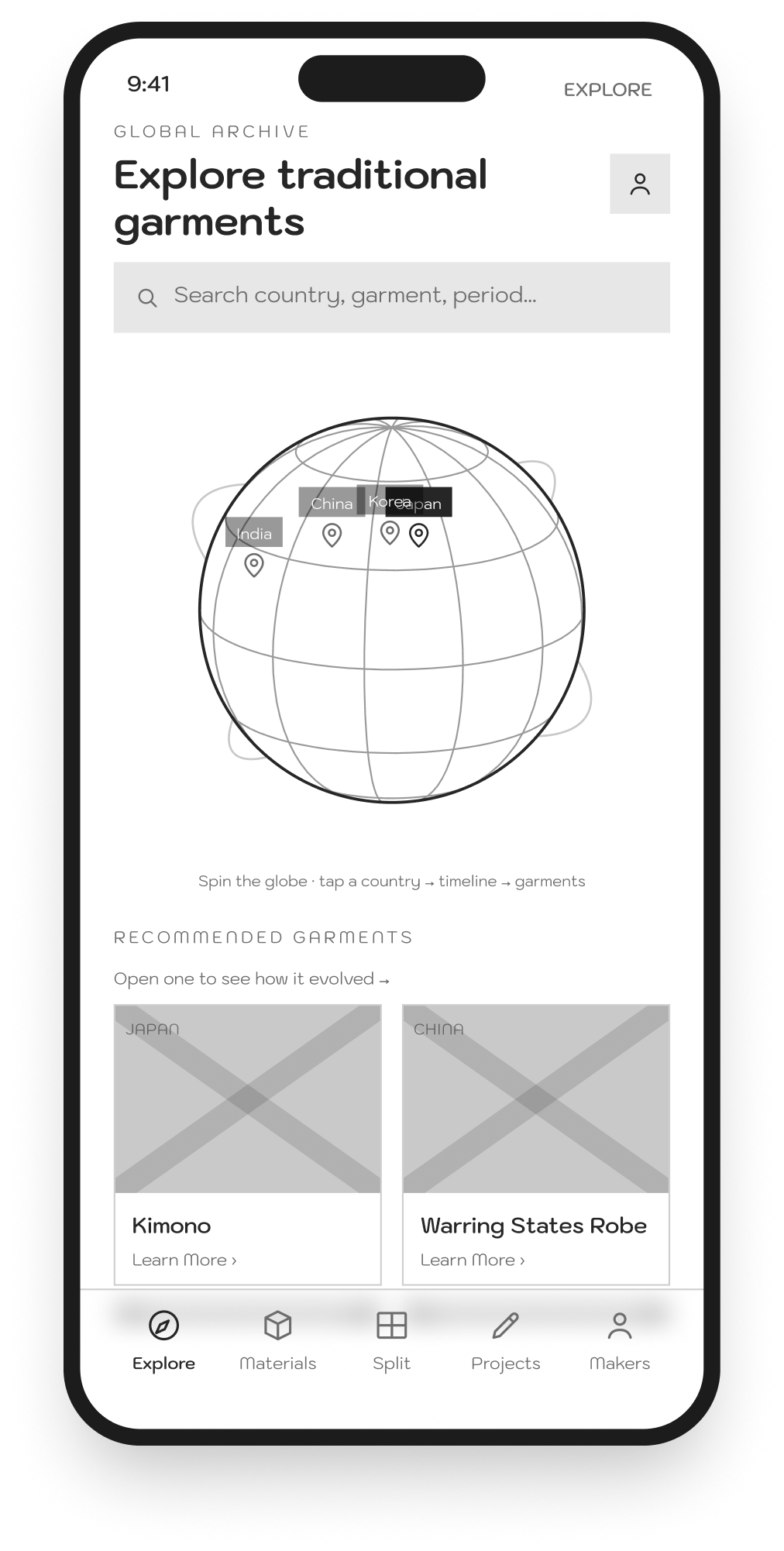
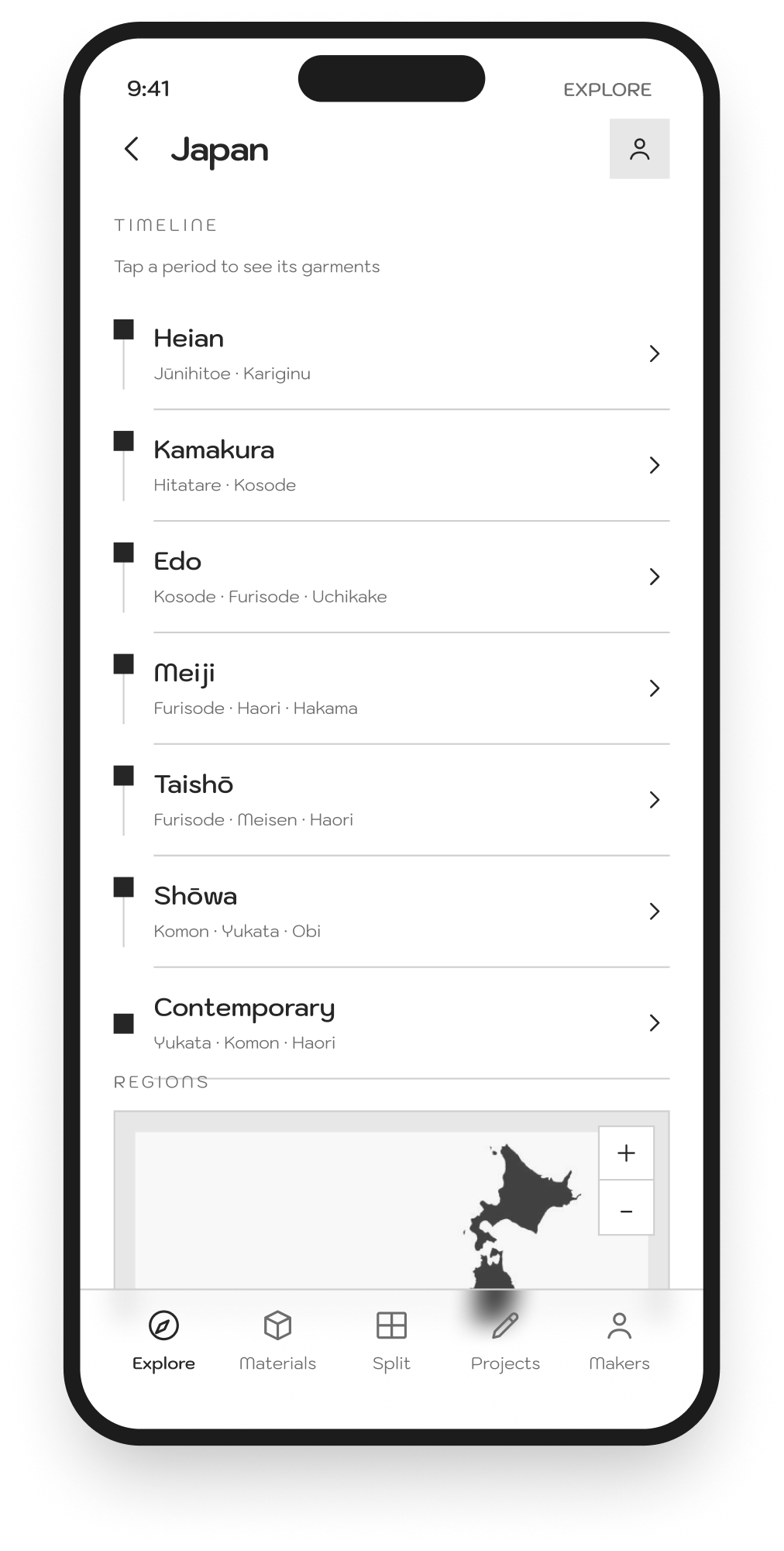
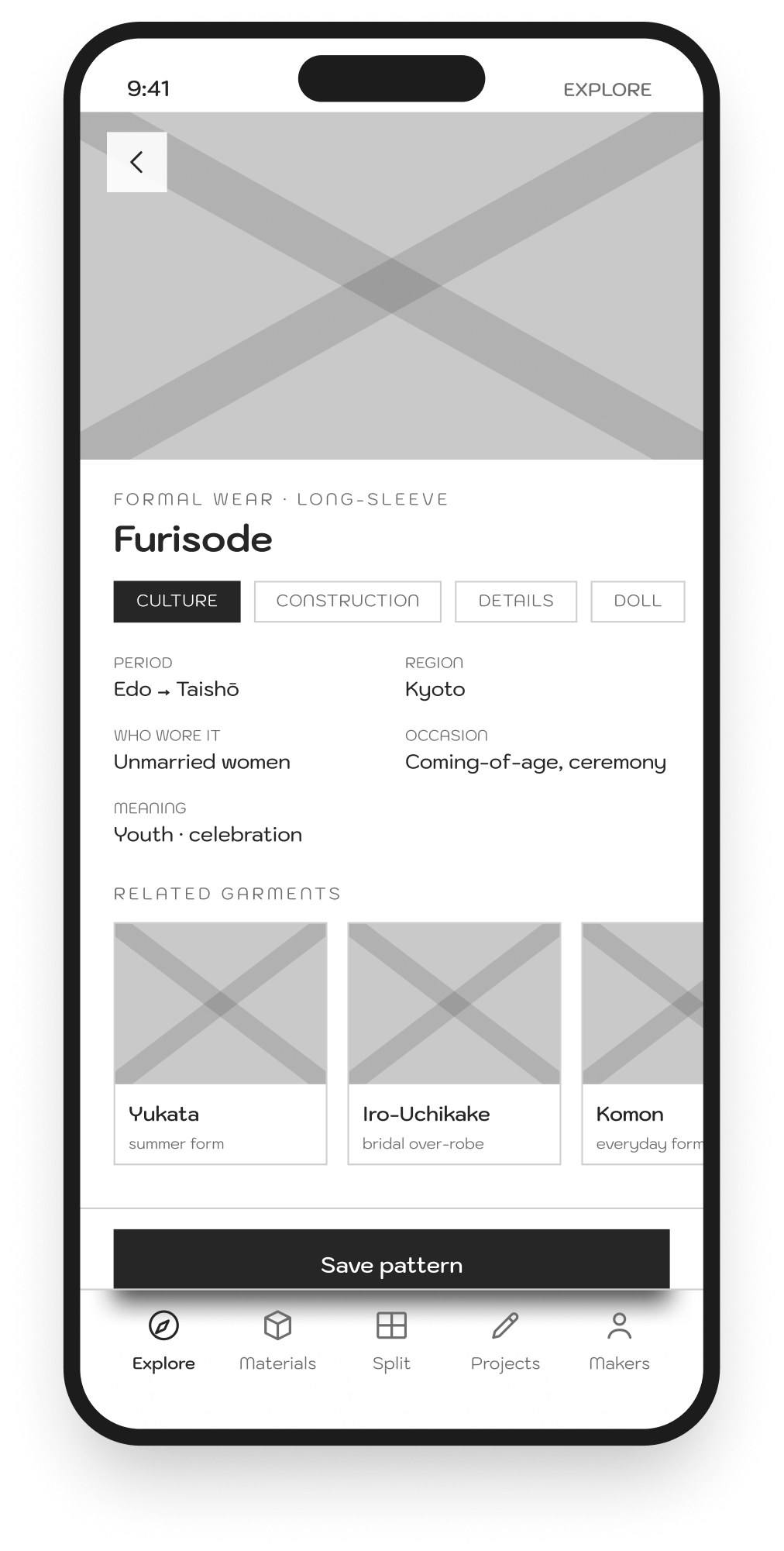
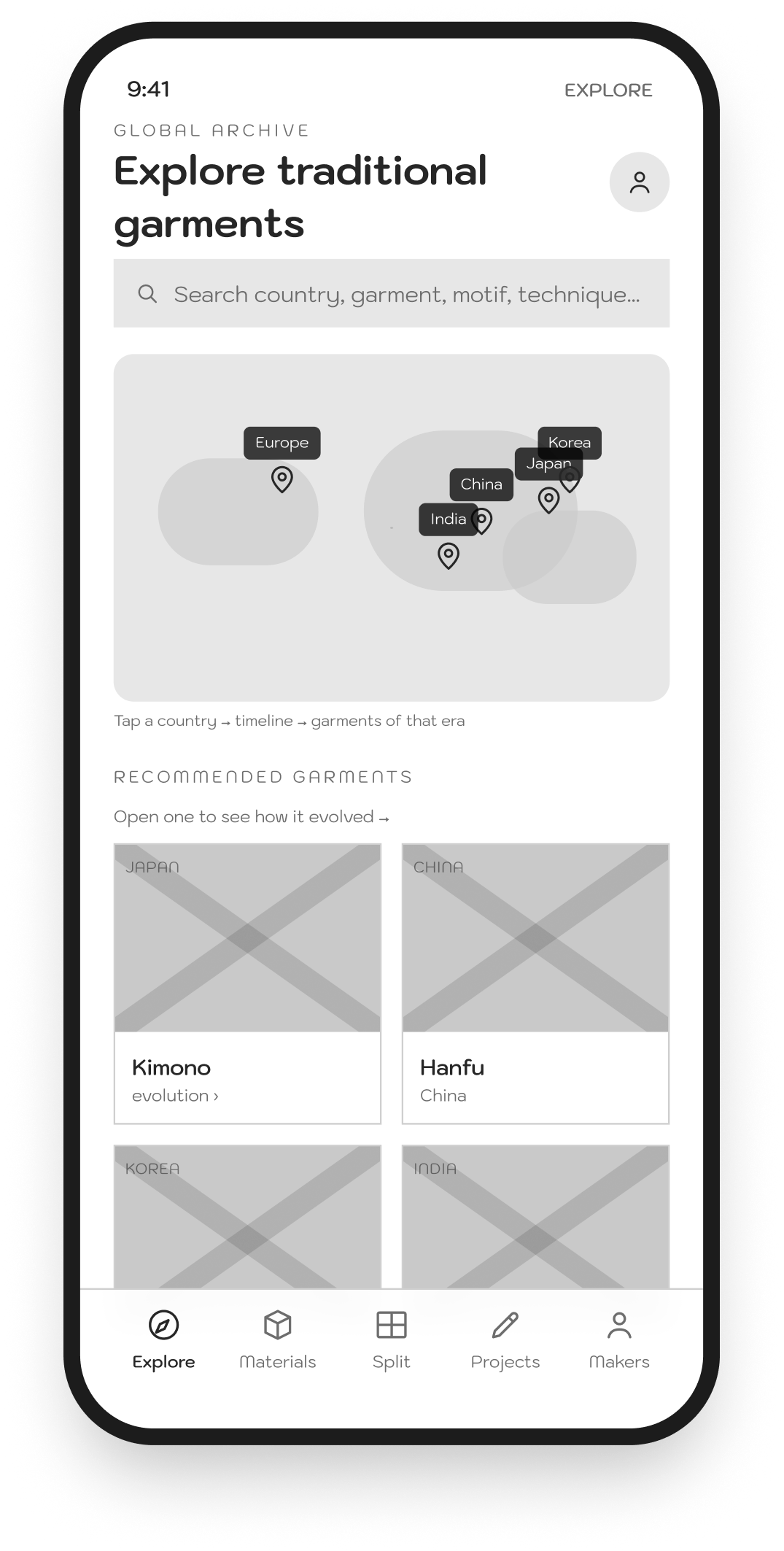
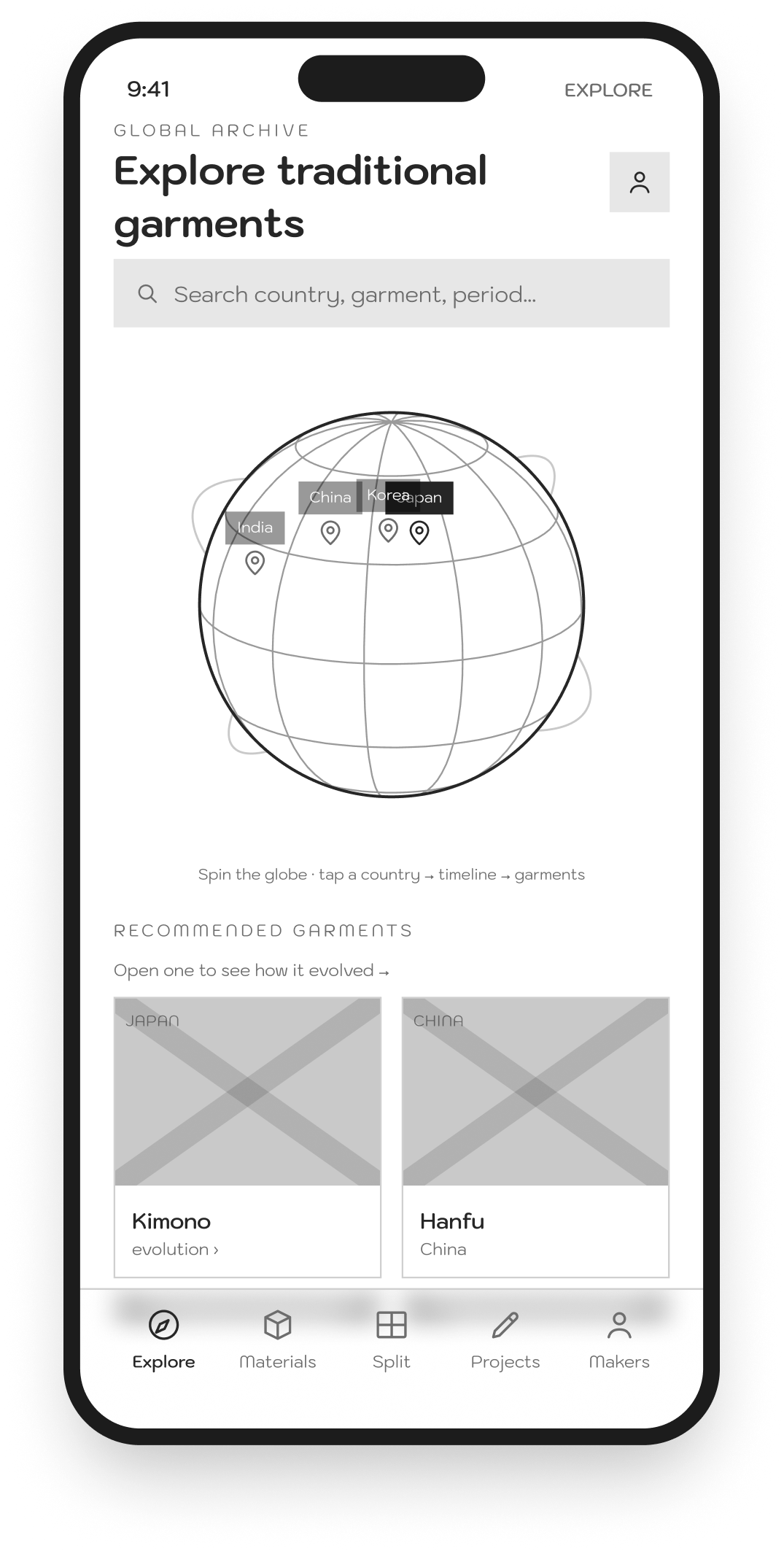
Select any screen to enlarge.Search or spin the globe to choose a country; enter a country timeline by period; open garment details to review use, region, wearer, meaning, and related garments; save references as patterns.
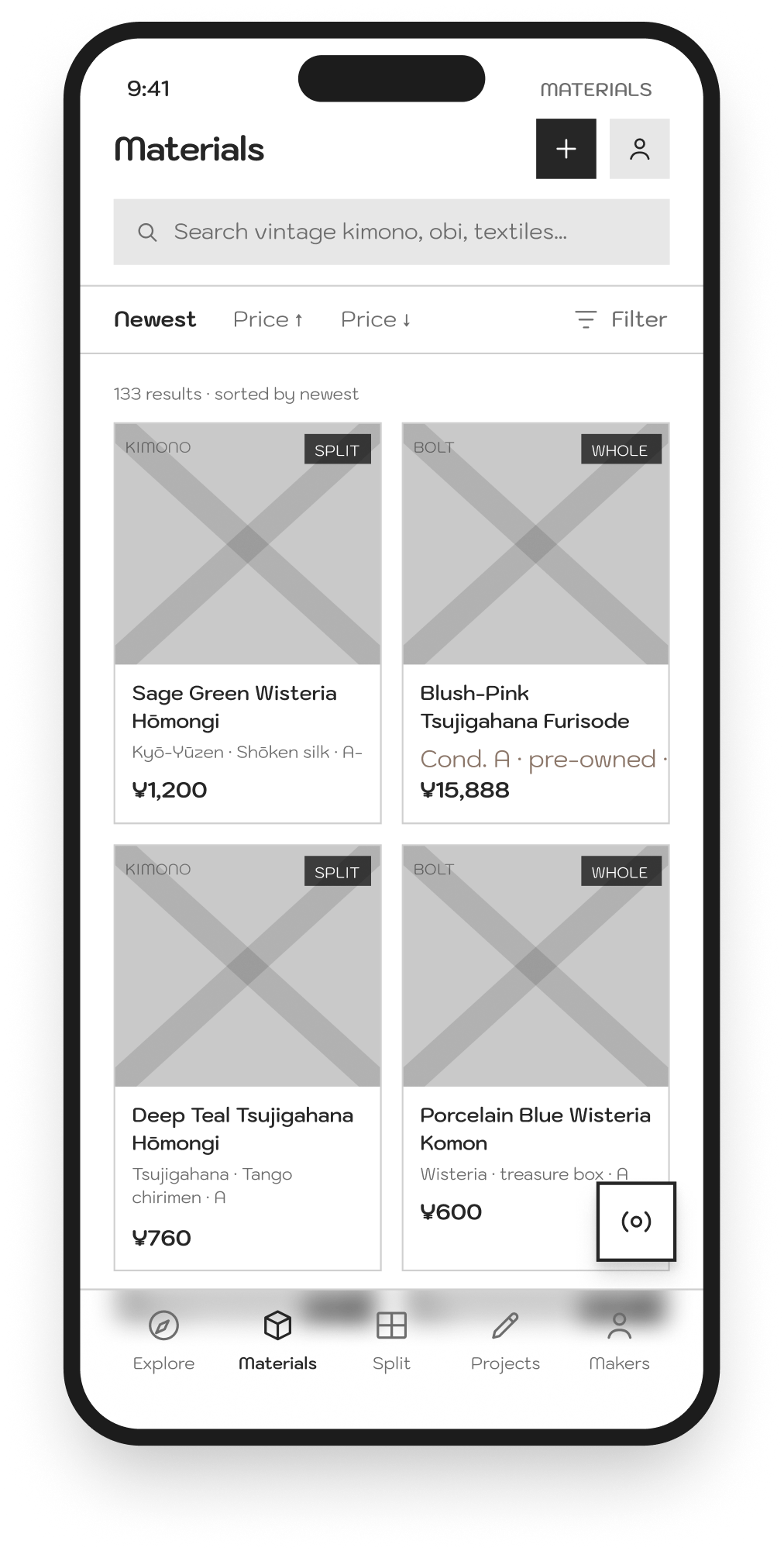
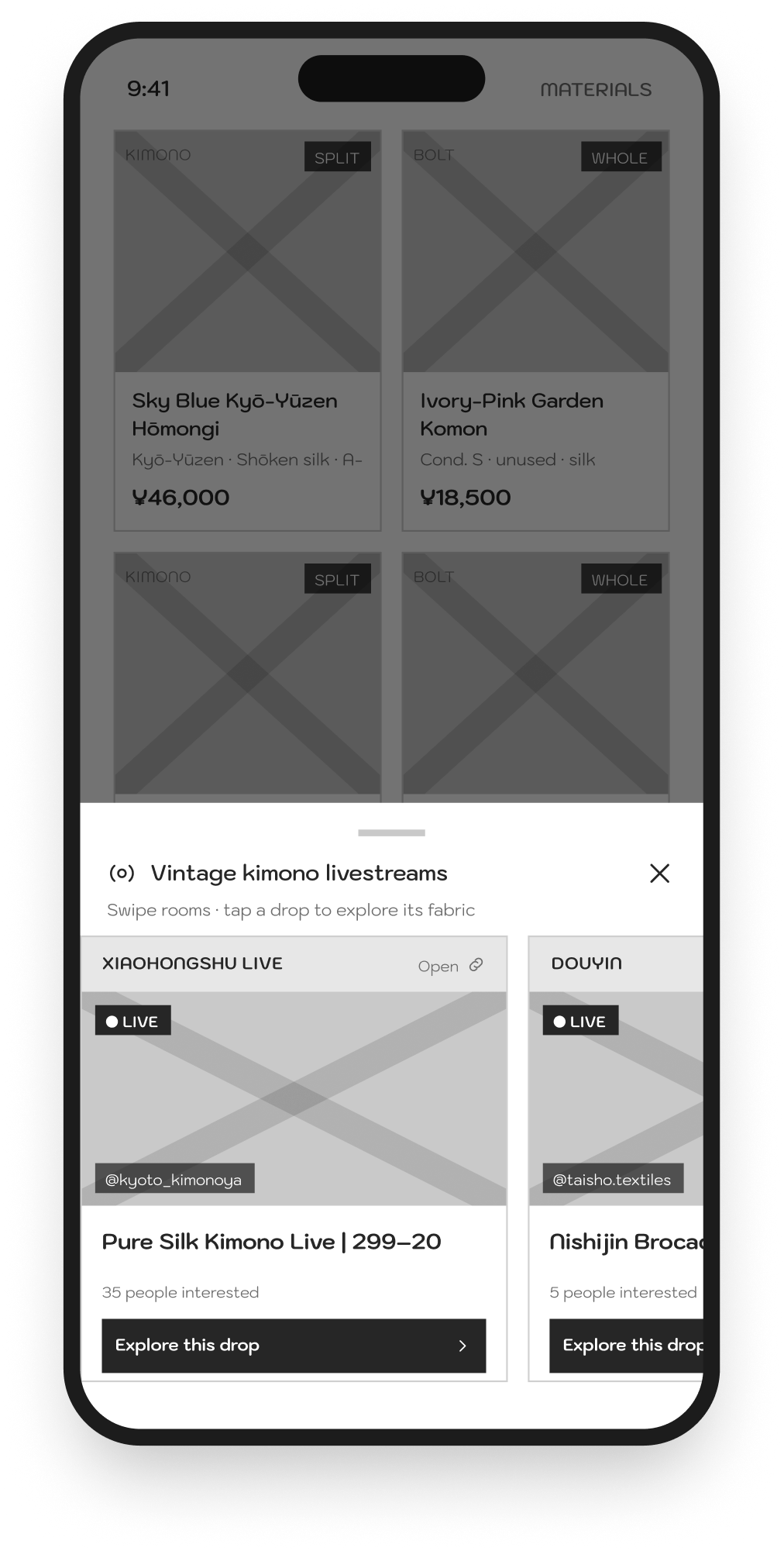
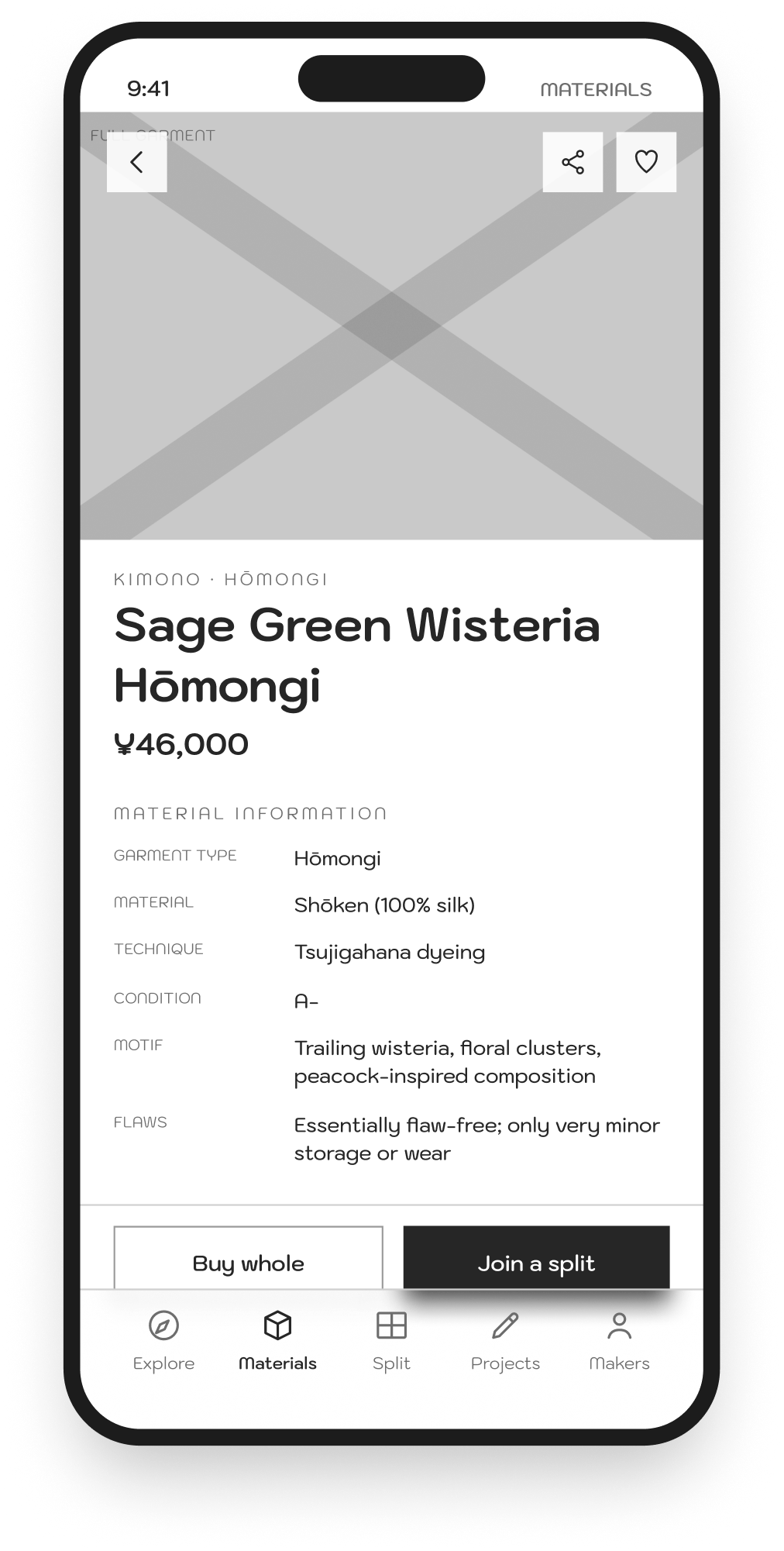
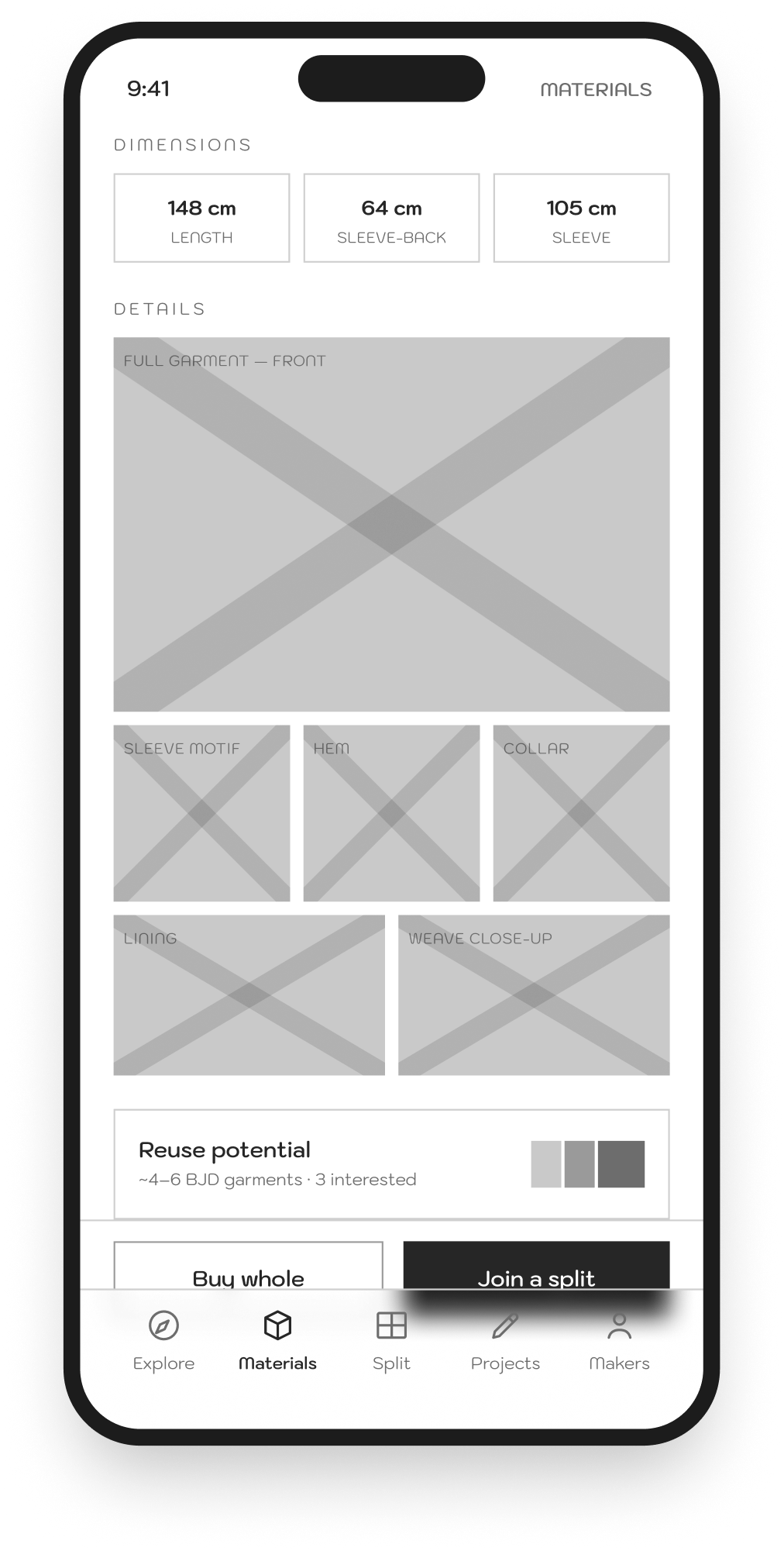
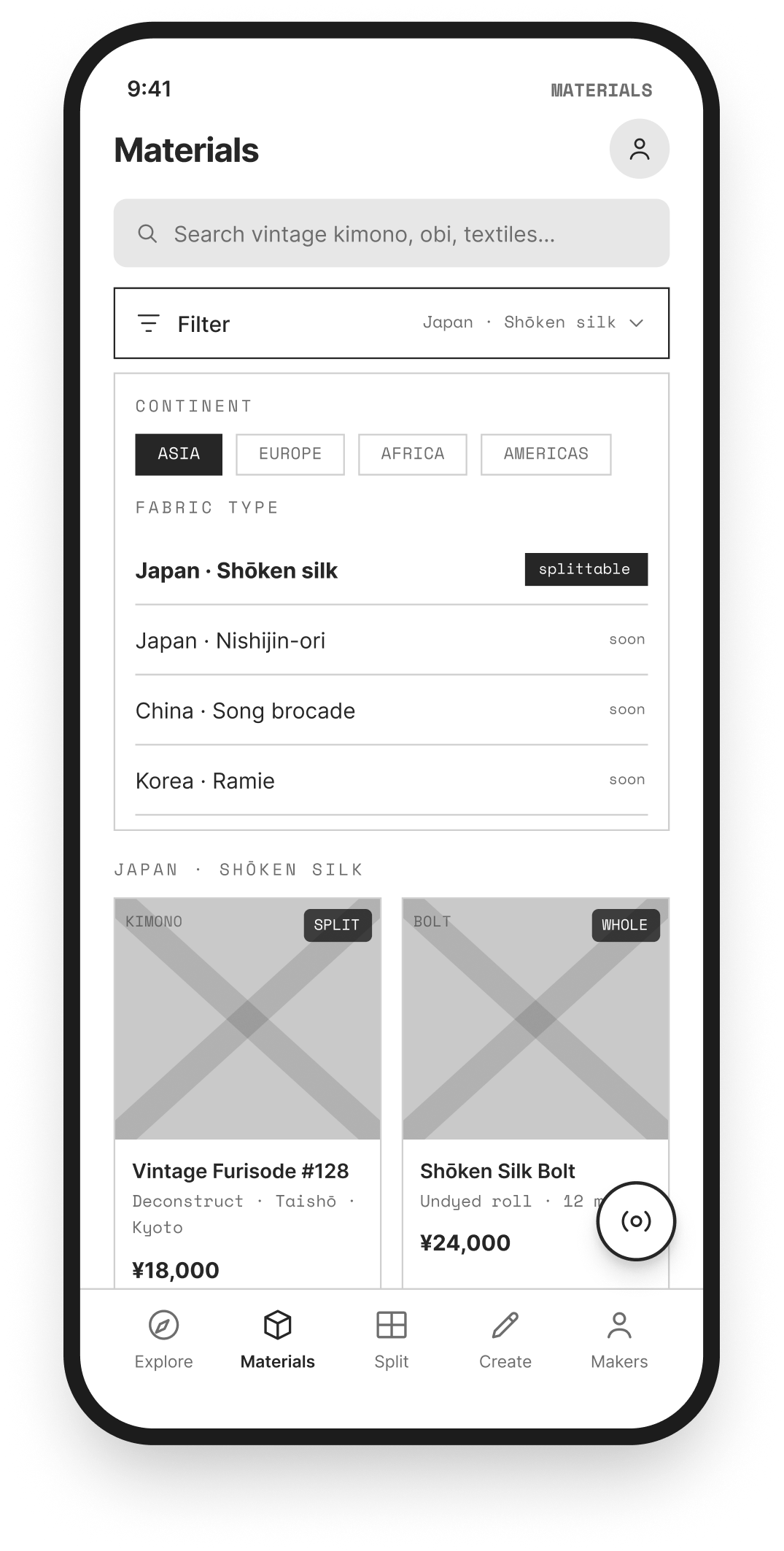
Browse and filter vintage kimono, obi, and textiles; review material, technique, condition, flaws, dimensions, and detail photos; estimate reuse potential; buy the full item or enter Fabric Map to claim sections.
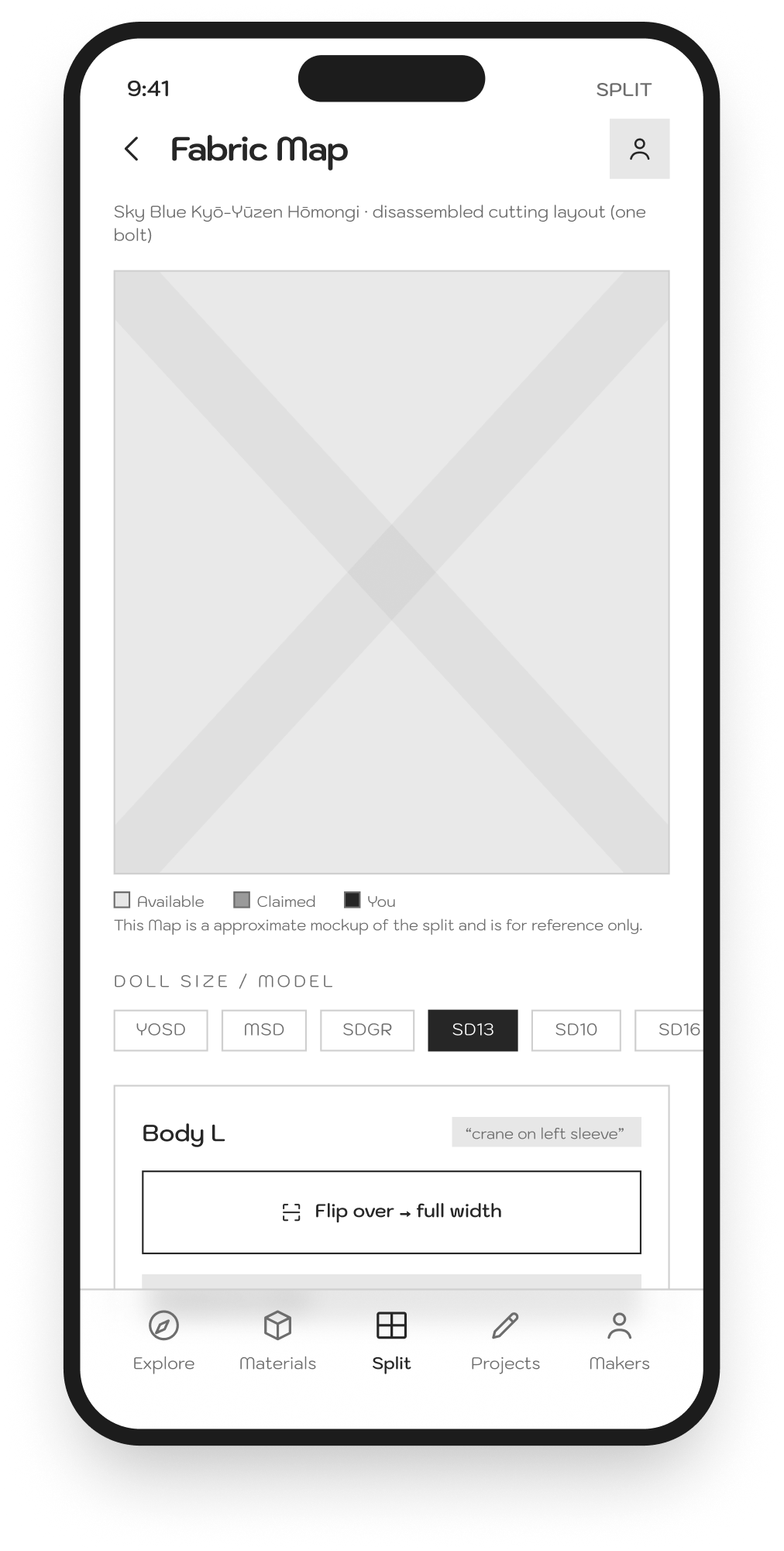
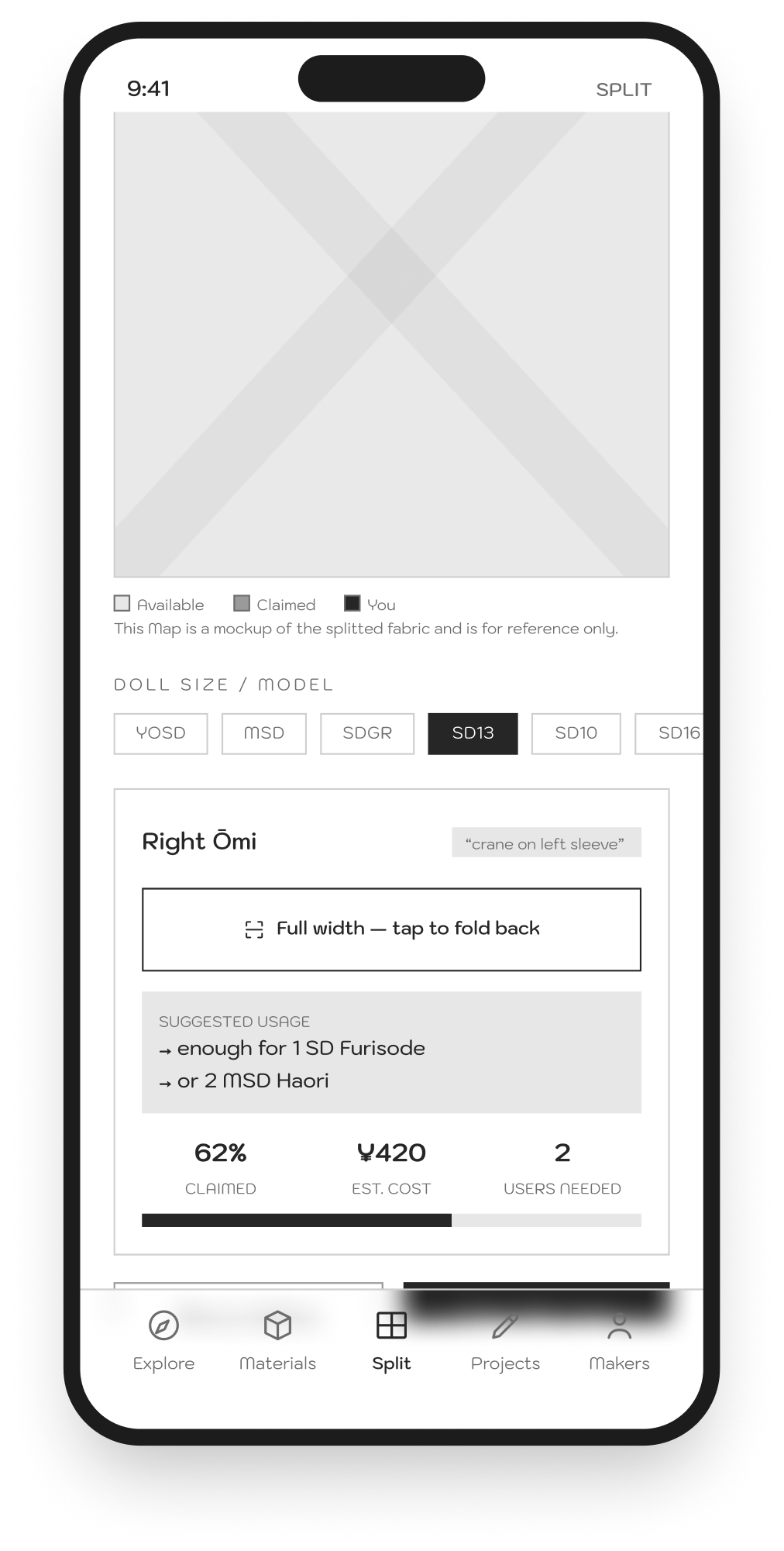
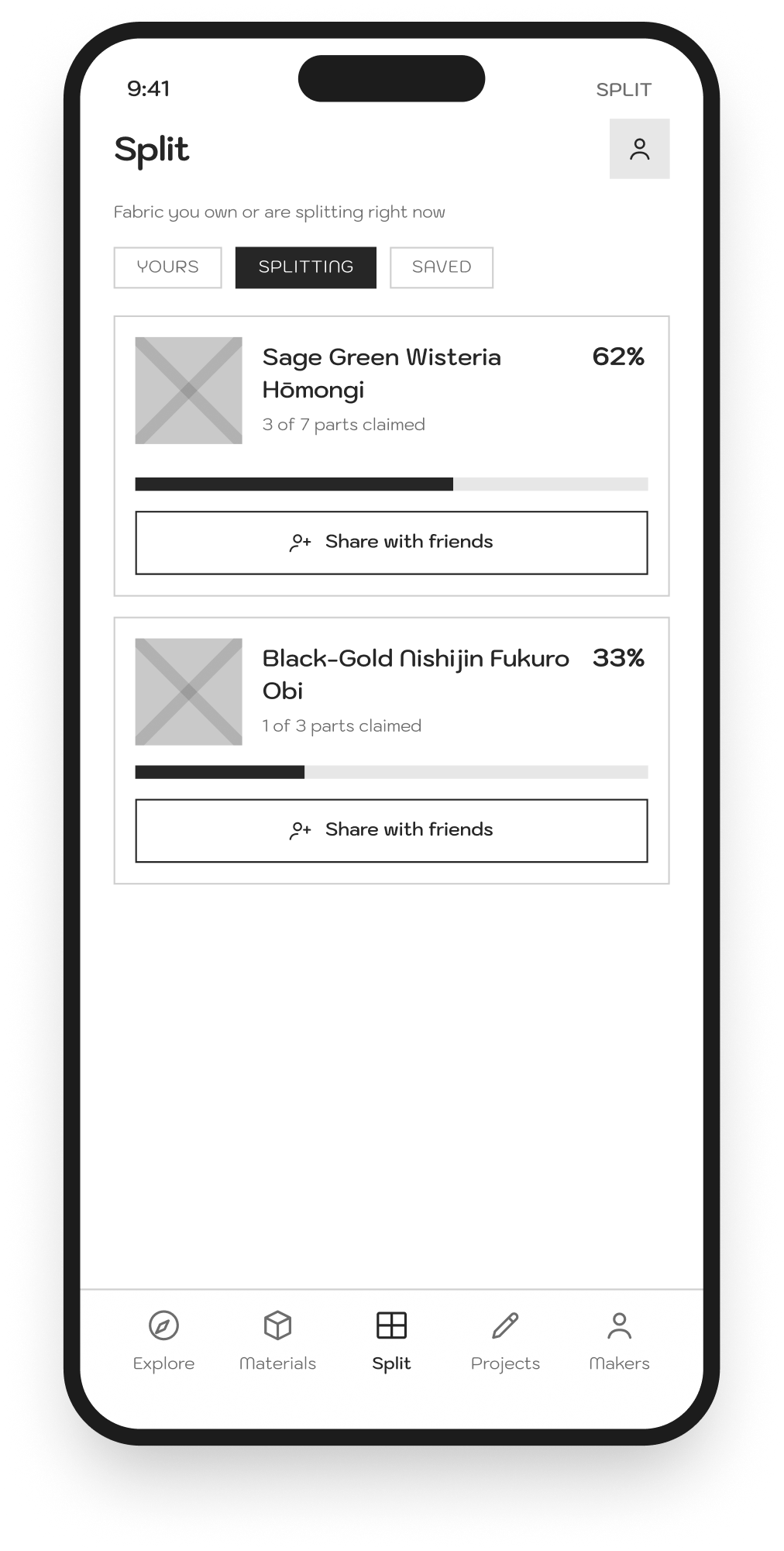
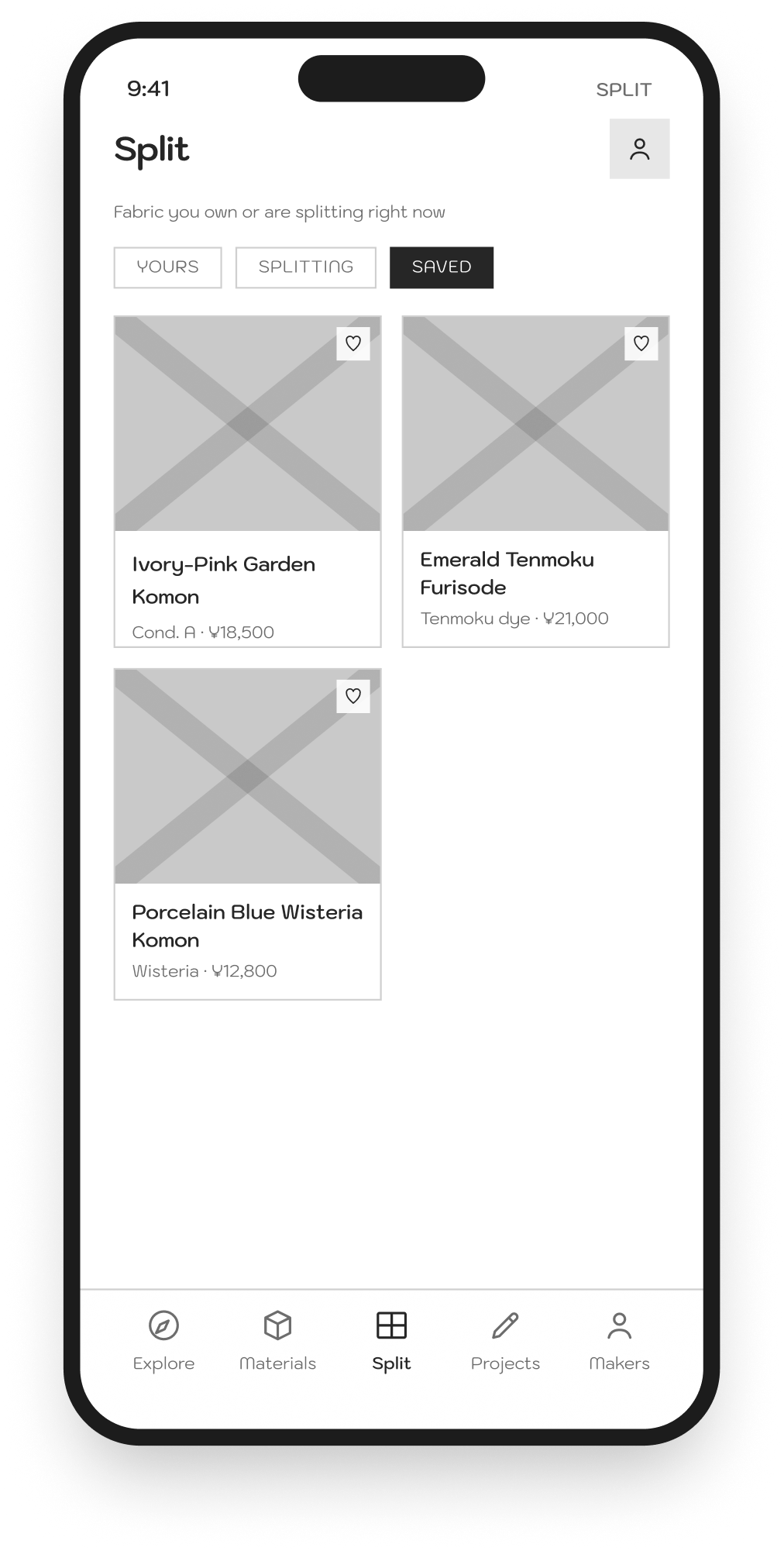
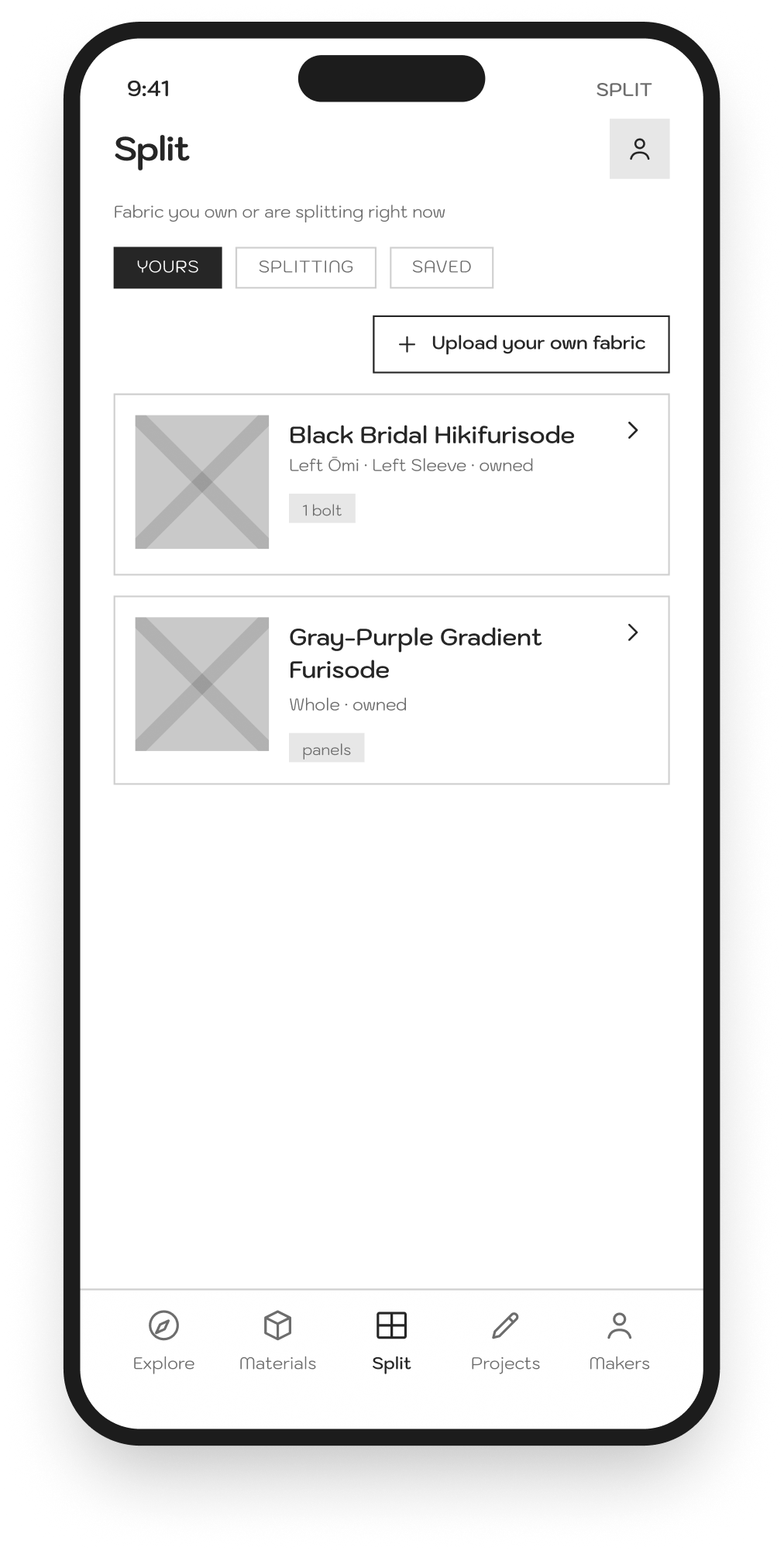
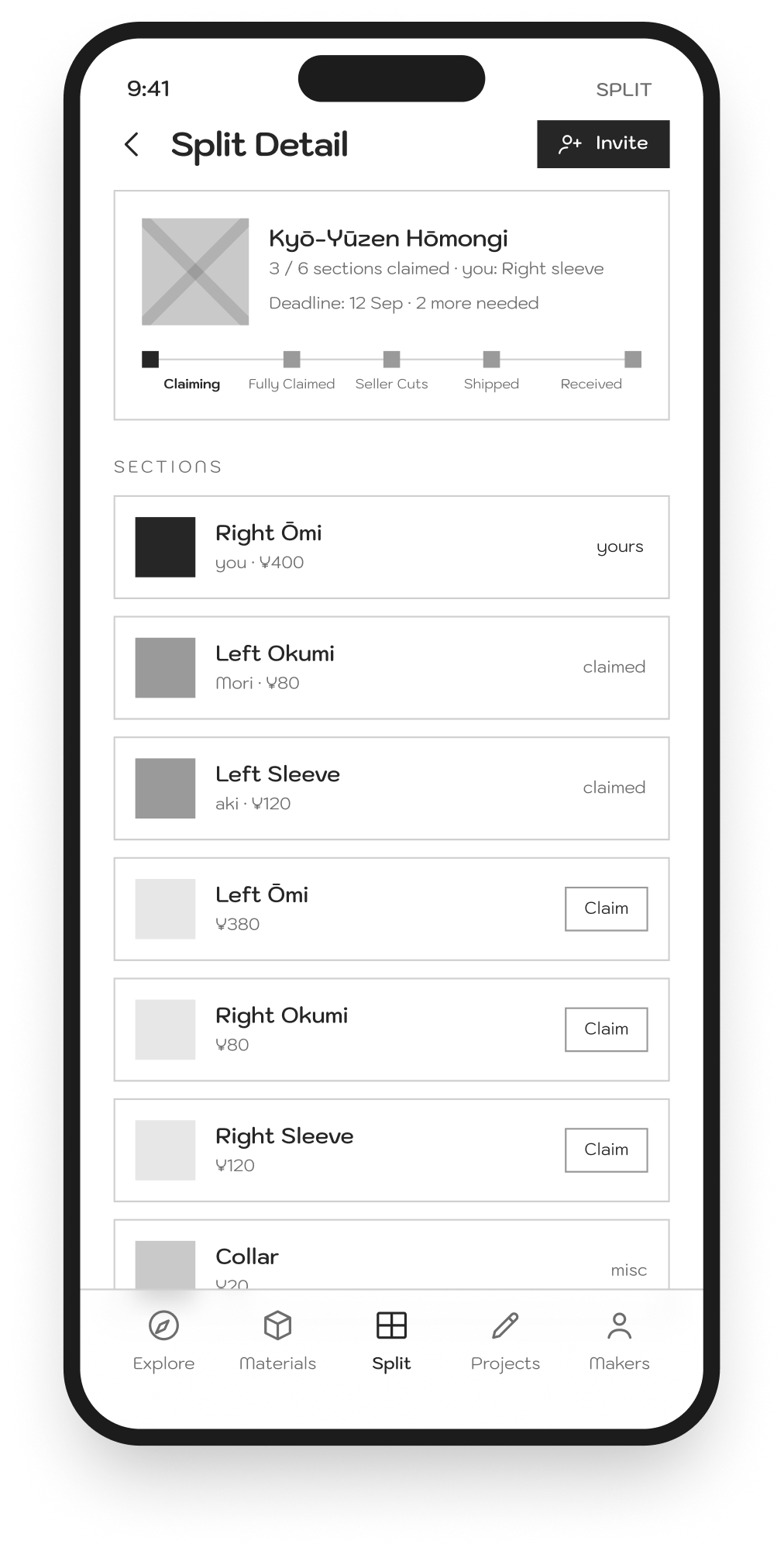
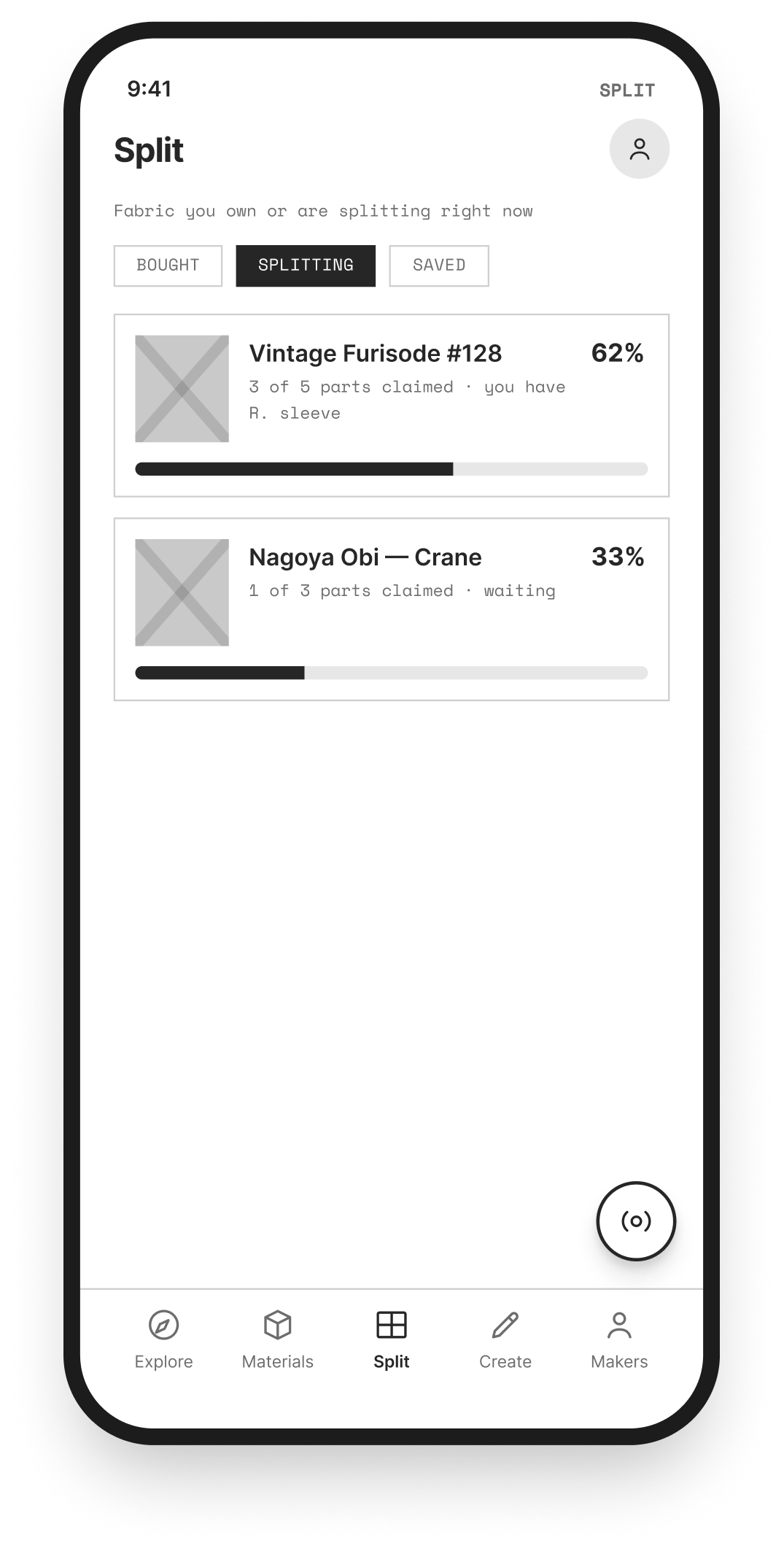
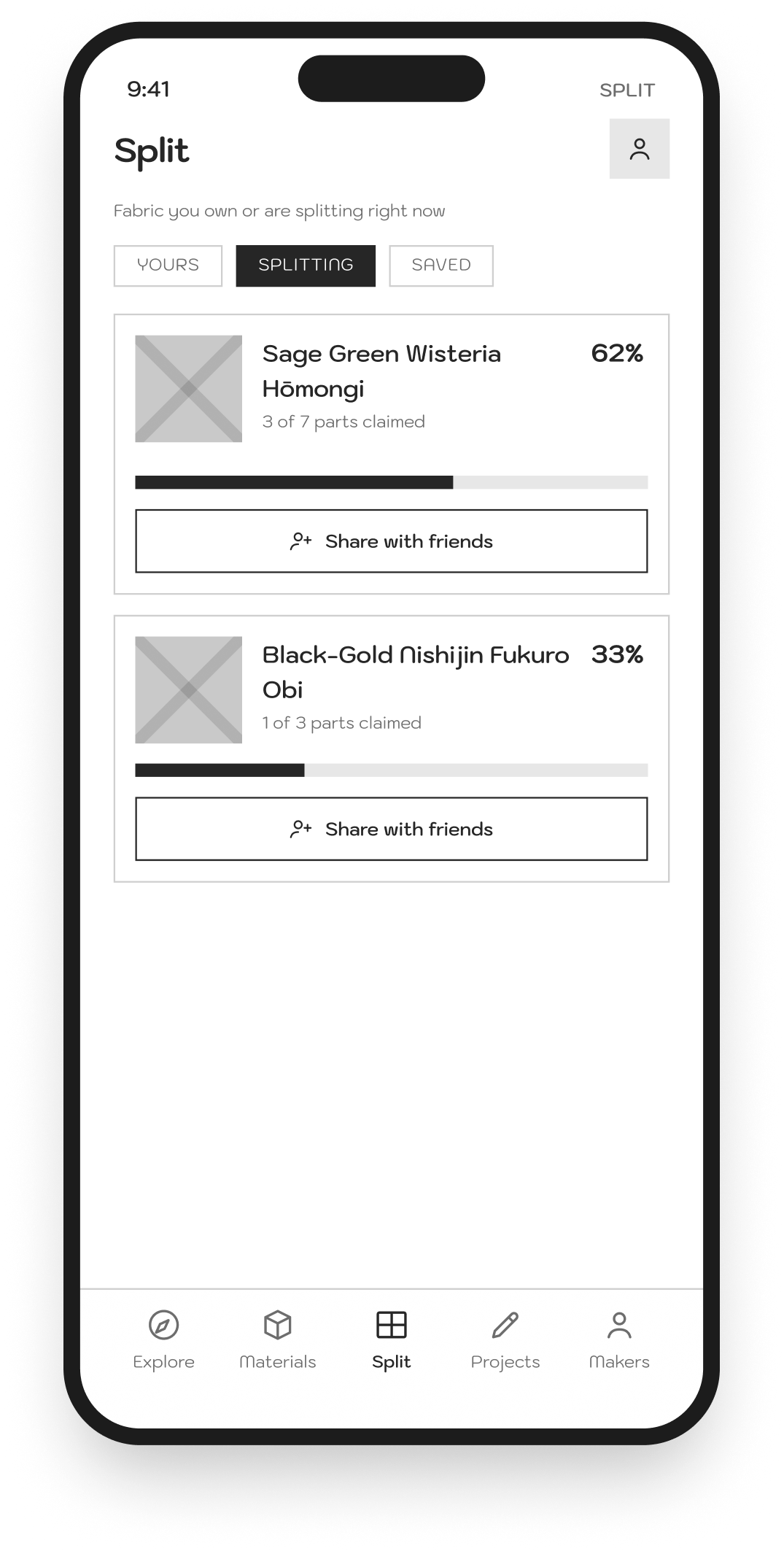
Manage owned, splitting, and saved fabrics; see claim percentage and participants; claim sleeves, collars, body panels, or leftover fabric; track deadline, cutting, shipping, and receipt; convert a claimed part into a project.
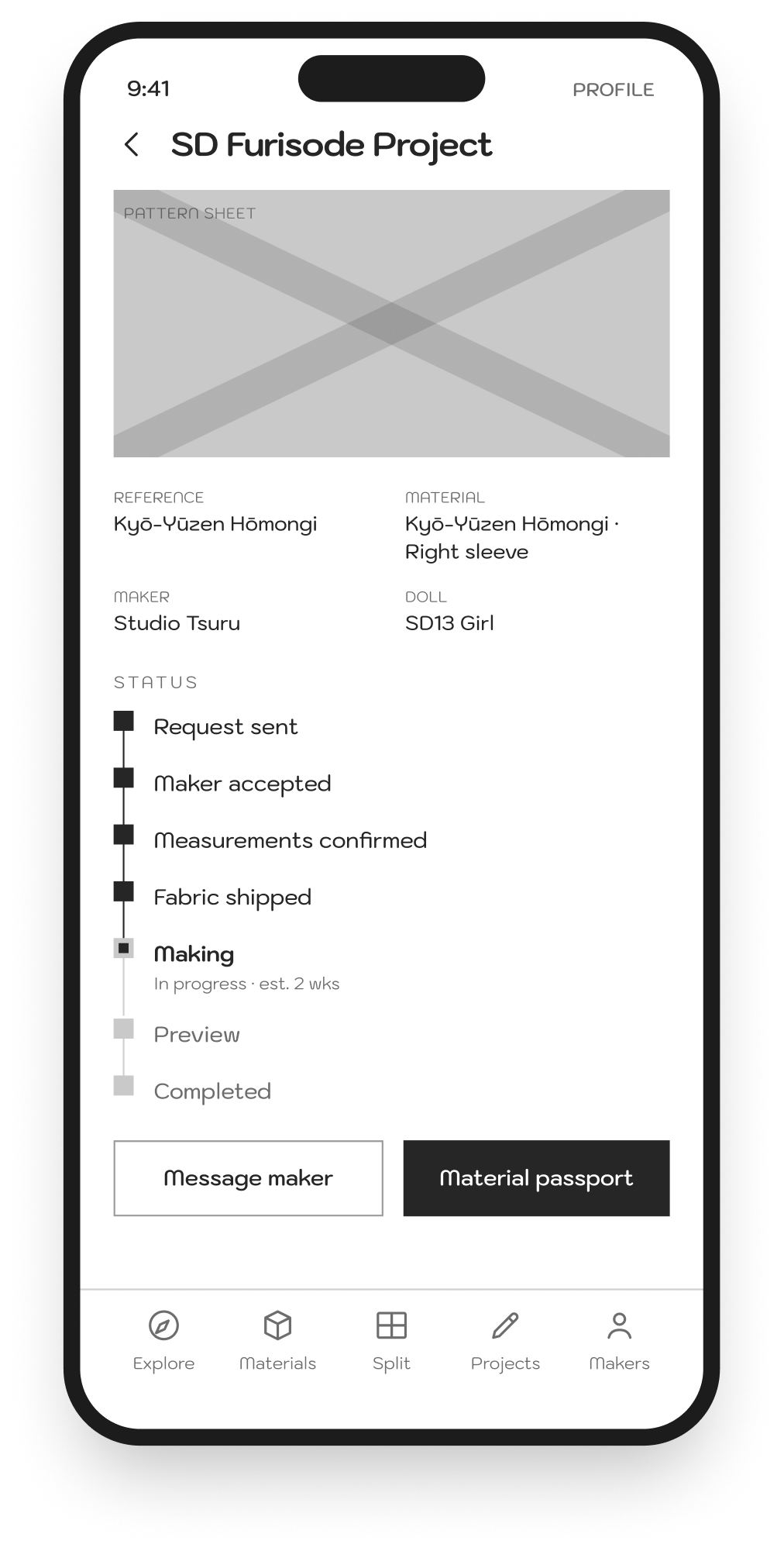
Manage active commissions and pattern sheets; combine garment reference, doll size, owned material, and style choices into a brief; after submission, track maker, measurements, fabric shipping, making, preview, and Material Passport.
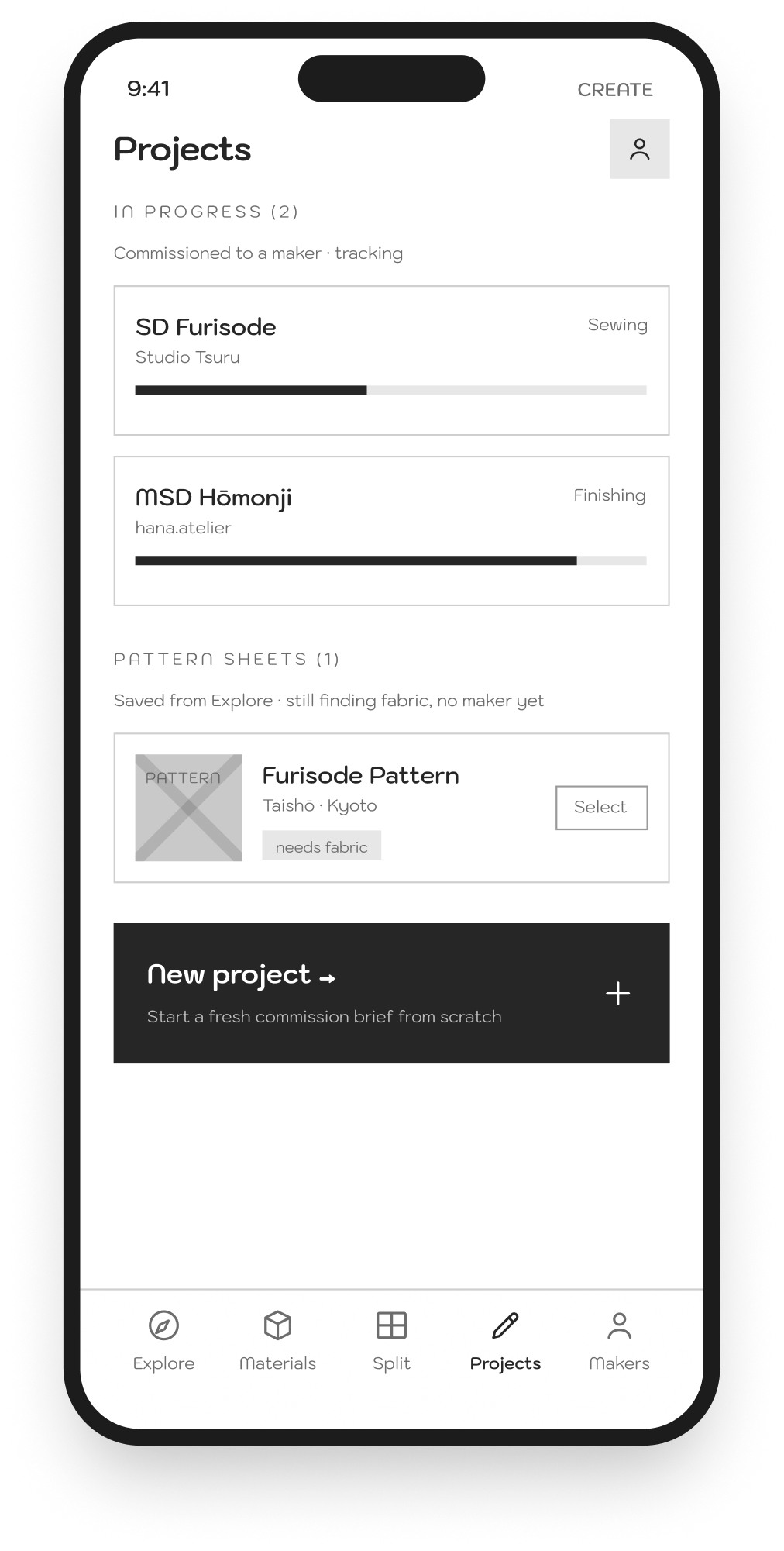
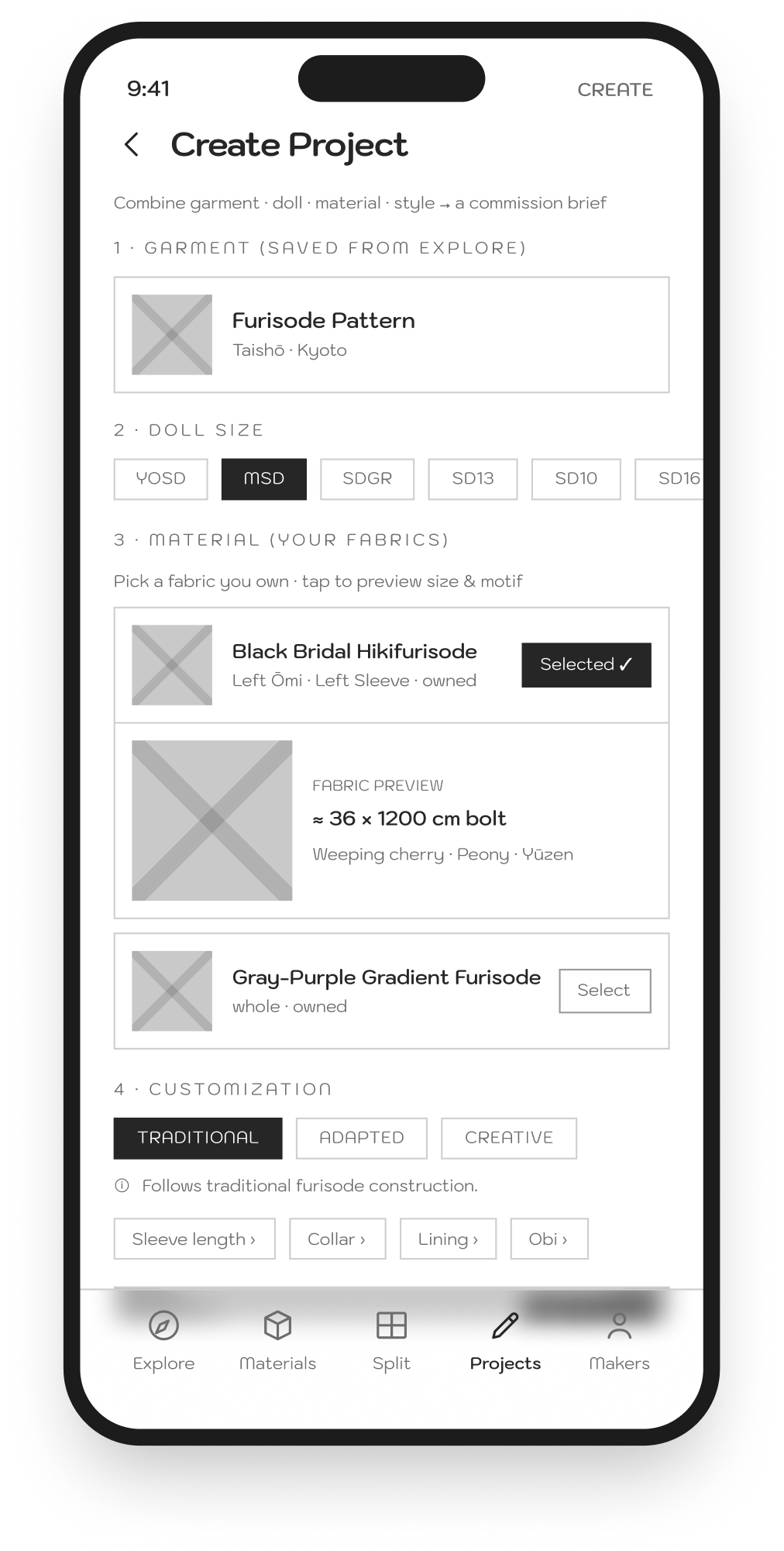
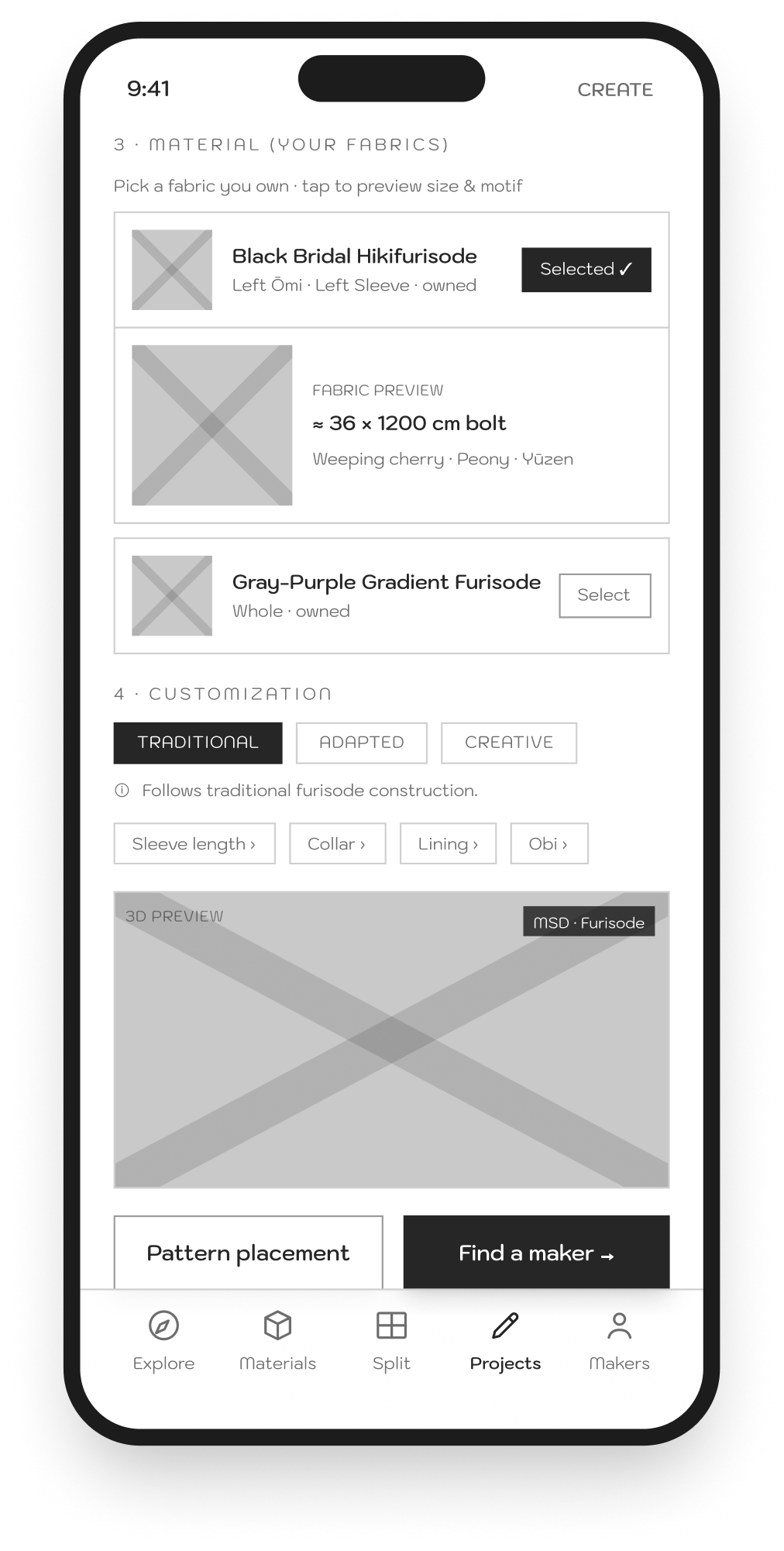
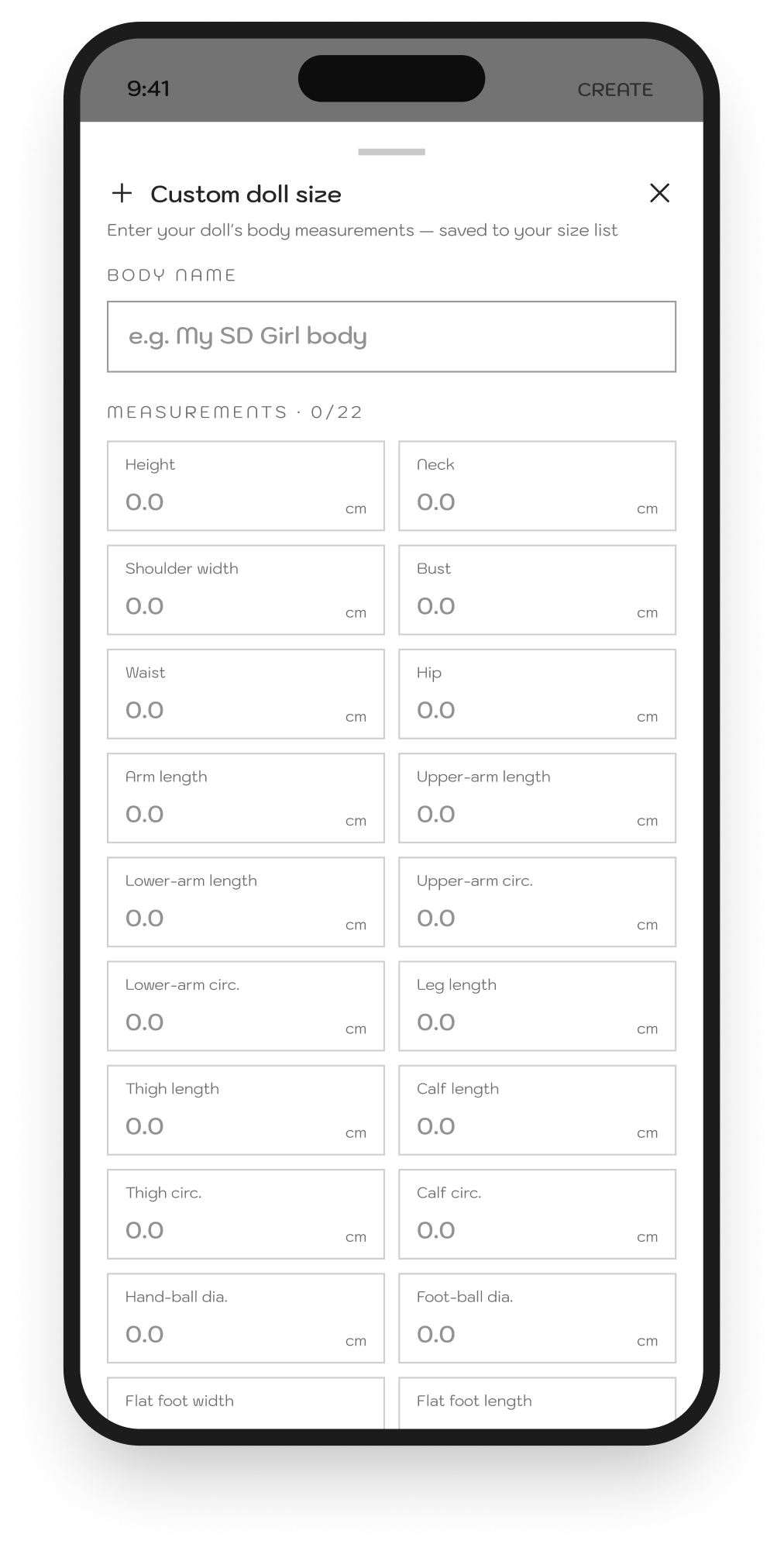
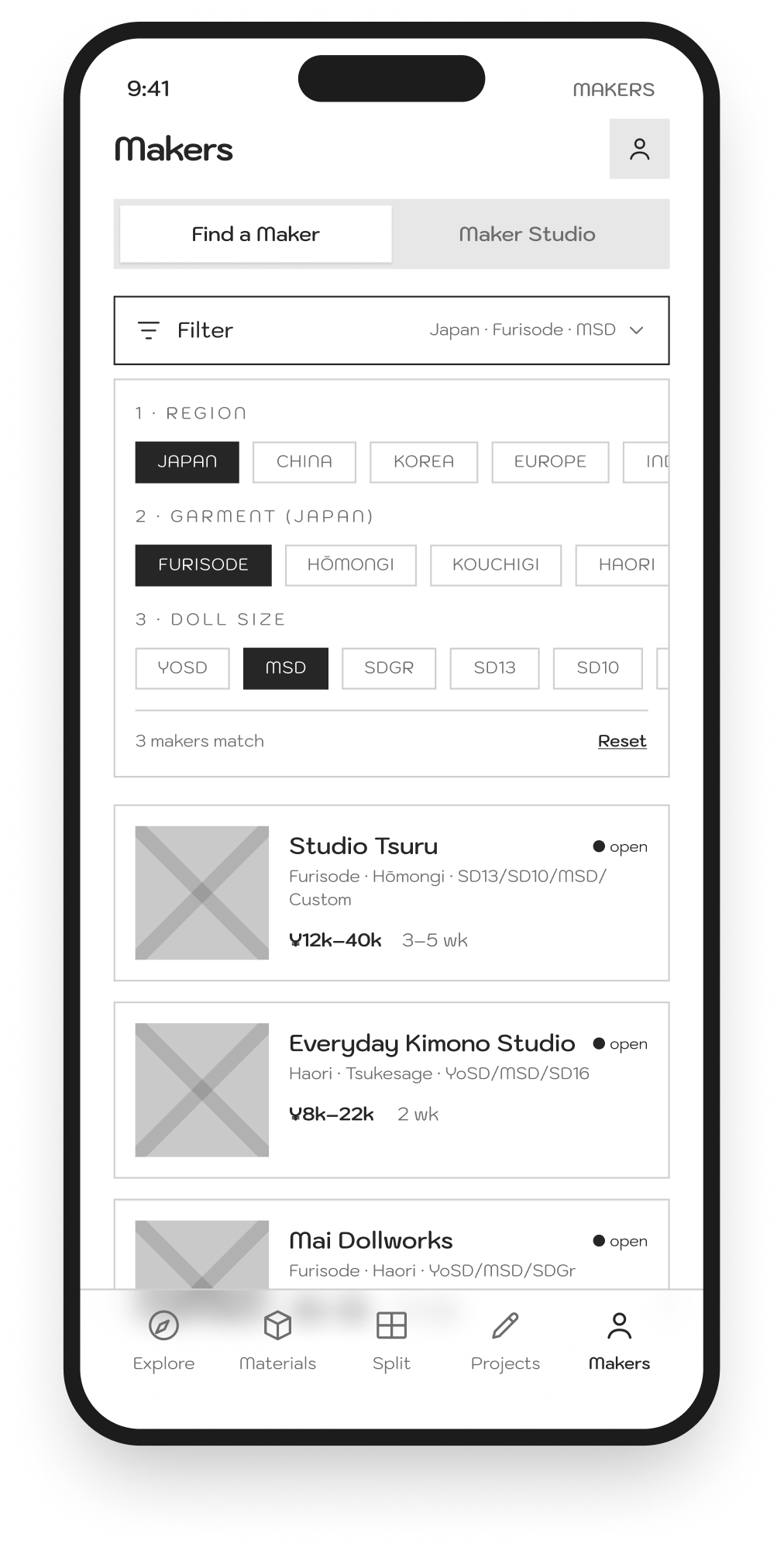
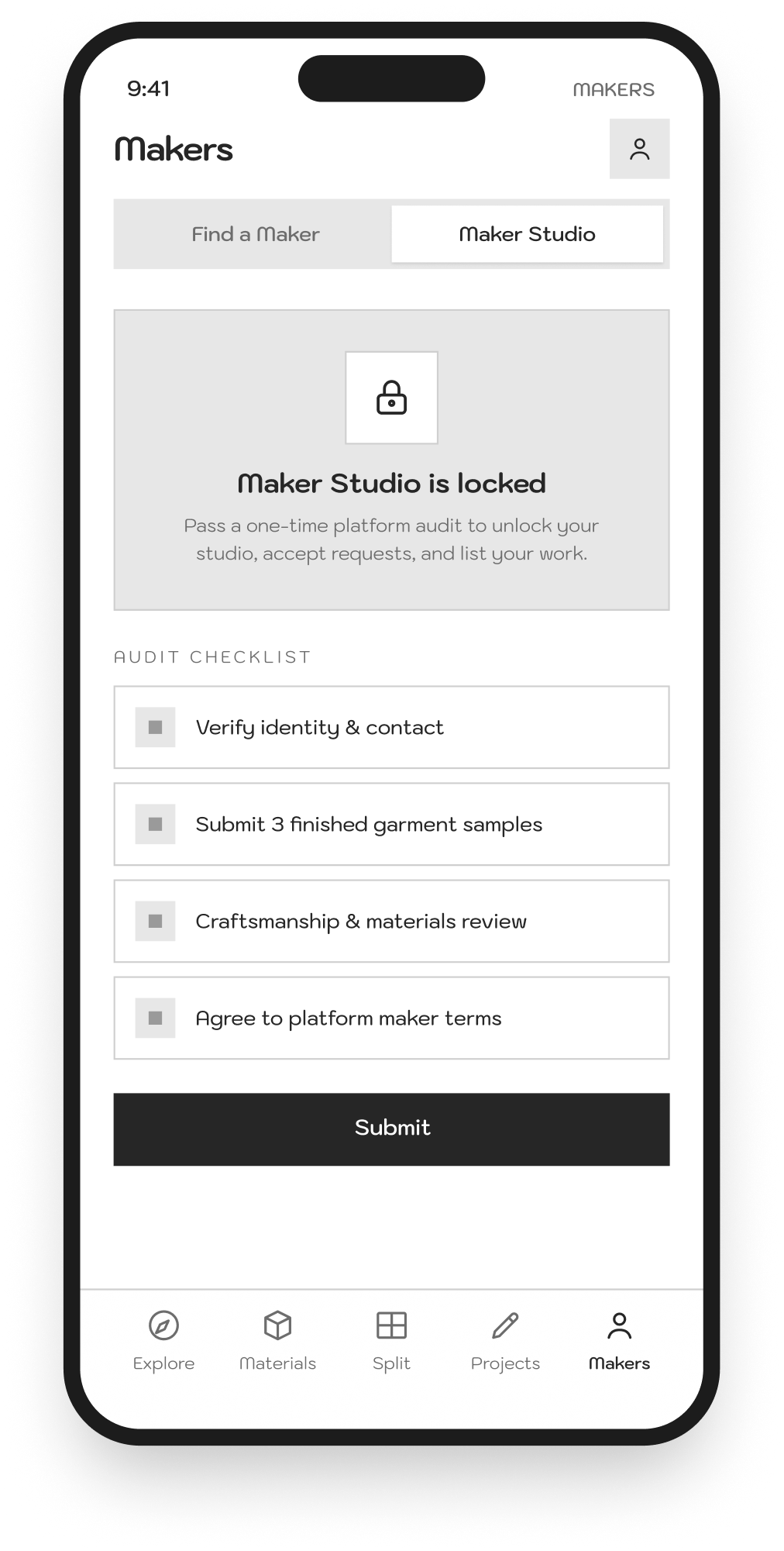
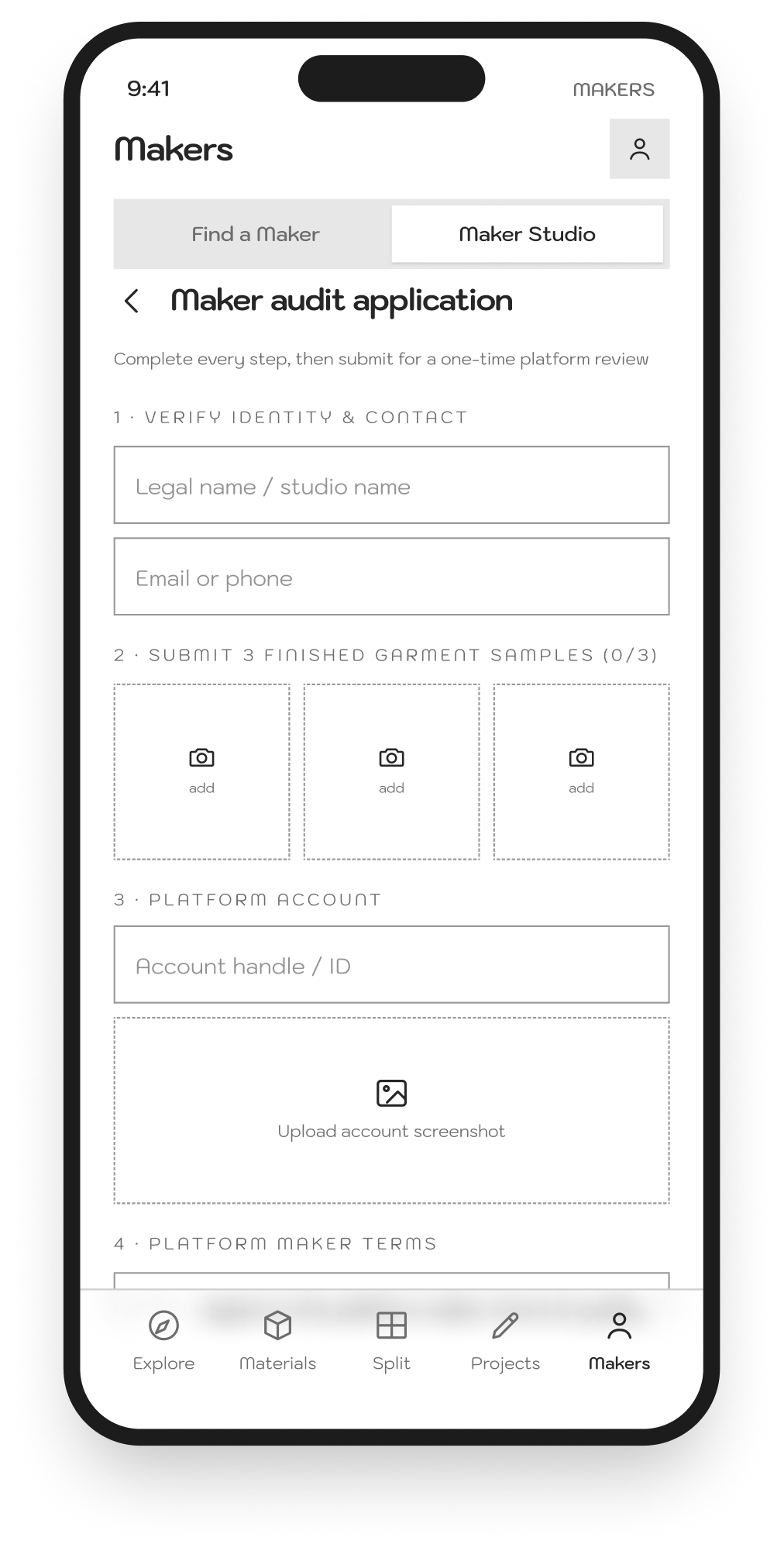
Buyers filter makers by region, garment type, and doll size; makers complete a one-time platform audit for identity, samples, account, and terms; approved studios manage availability, requests, active projects, garment categories, and portfolio.
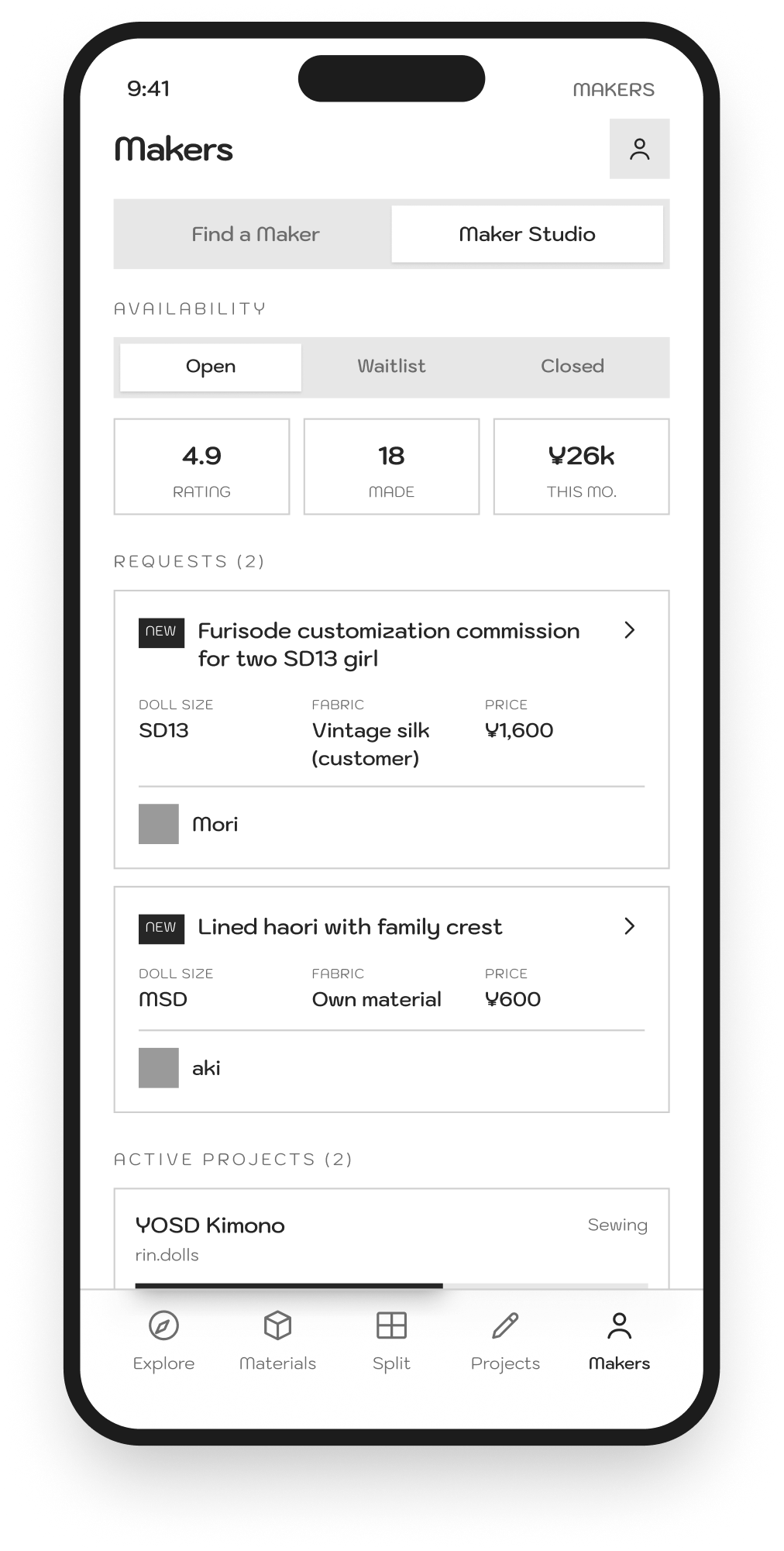
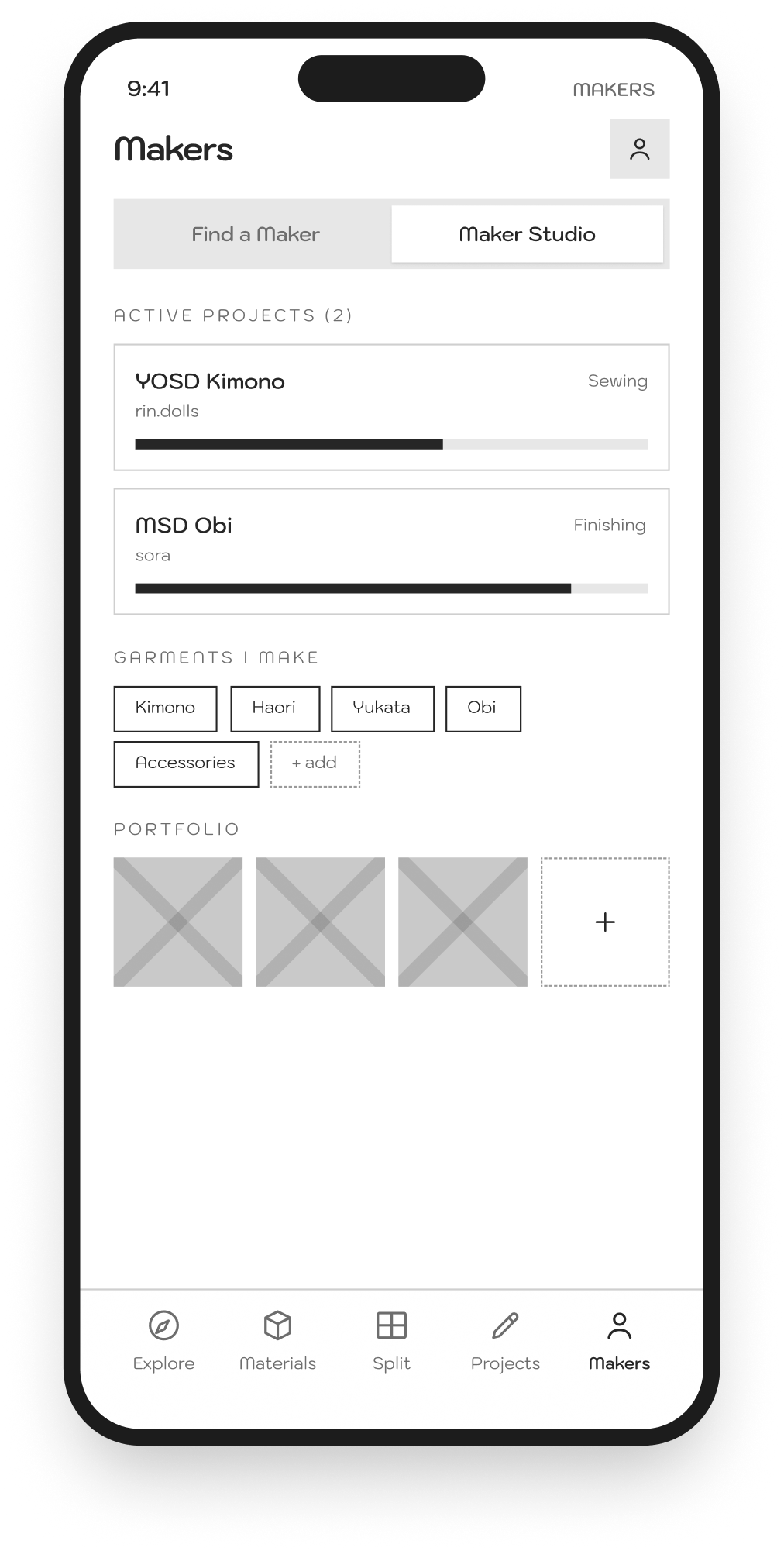
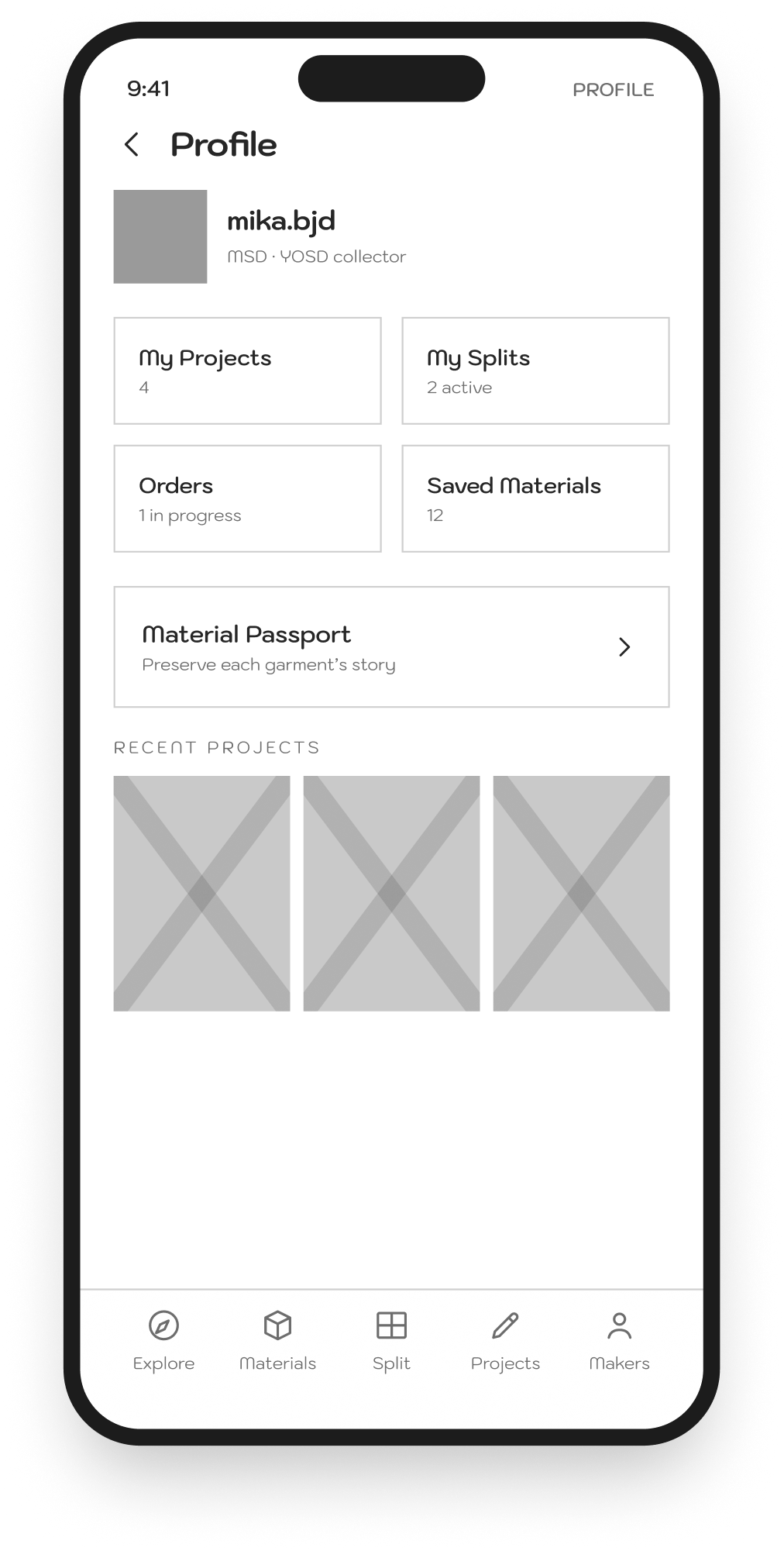
Show collector identity and preferences; summarize projects, splits, orders, and saved materials; open Material Passport to preserve source, material, and making records for each finished garment.
Before
After
Revision / 01
Replaced the flat regional map with an interactive globe as the main cultural exploration entry point.
Before
After
Revision / 02
Added a Share with Friends action directly under each ongoing split.
Before
After
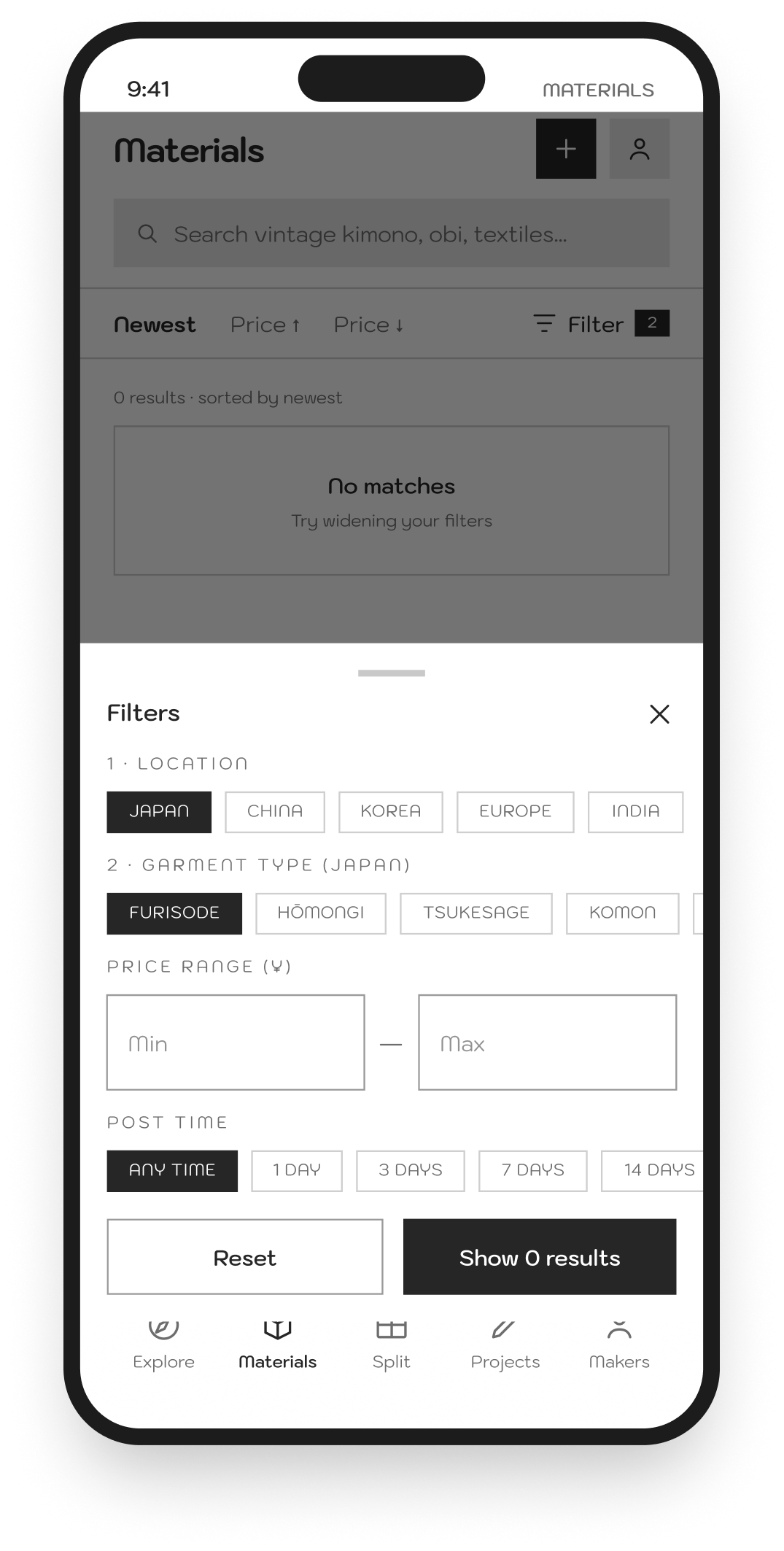
Revision / 03
Filters were reorganized into location, garment type, price range, and post time.
Hannah sees another collector’s BJD wearing a kimono on social media and wants to create one for her own doll.
Hannah sees another collector’s BJD wearing a kimono on social media and wants to create one for her own doll.
She explores kimono types, styling rules, and accessories to understand what would suit her SDGr doll.
She filters the Materials section to find fabrics that match her preferred kimono type, budget, and style.
She checks the recommended fabric amount for her doll size, selects the sections she needs, and joins a fabric split with other users.
She compares makers by doll size, kimono type, portfolio, pricing, and availability, then invites a maker to the project.
She follows the commission from the maker’s acceptance and measurements to fabric shipment, making, and preview.
She receives the finished kimono, dresses her doll, and shares the result on social media.
01
Beyond kimono, expand traditional garment patterns and materials.
02
Create a space for users to resell or auction completed BJD kimono they no longer use.
03
Allow makers to display fabrics they already own and are available to use for future commissions.
04
Makers can post a specific fabric as an open commission opportunity.

